Understanding Council: “I wouldn’t wish it on my worst enemy” – CRCHES confronts the reality of homelessness
It could happen to anyone.
Lose your job, bounce a cheque and suddenly, there you are, homeless. Maybe you’re sleeping in your car, or in a tent, just trying to make it from one day to the next, trying to find a way to get back on your feet.
Meanwhile, the keyboard warriors on social media are complaining about your tent, accusing you of being a drug addict, a criminal, someone who doesn’t belong in the community.
Where do you turn? Is there anyone who can help you get back on your feet?
Then there’s the businesses which are affected by the few bad apples who give rise to the impression that all homeless people are drug-addicted criminals.
What can they do to protect their employees, customers and livelihoods?
It was these questions, and a genuine concern for the well-being of everyone in the community that led to the formation of Council’s Response Committee on Housing and Emergency Shelter, known as CRCHES in September 2024.
Several initiatives had already been tried in the city, following complaints from local businesses to Council and a series of posts on Facebook about encampments springing up around town. These included the rebirth of Citizens on Patrol, the formation of a Good Neighbours Table, and an attempted ban on camping within the municipality, which was vehemently opposed by the BC Human Rights Commission.
“It’s that they are in tougher situations when they don’t have a home to go to.”
Councillor Sarah MacDougall
As CRCHES, made up of Councillors Trevor Bolin, Gord Klassen and Sarah MacDougall – which really started as a think-tank to determine how to implement Bolin’s proposed July 2023 bylaw against camping in the city – began to investigate what was behind the homelessness in the city, they learned it was bigger than any of them had imagined. And that it would take more than one or two initiatives to make things better.
Among the key things they learned, MacDougall and Bolin told the broken typewriter, was that it’s not just that having unhoused people isn’t good for the community, it’s not good for those who have no place to call home.
“It’s that they are in tougher situations when they don’t have a home to go to,” MacDougall said.
“I think one of the things we’ve learned through this committee is that housing is a very key aspect, absolutely, but if you don’t have the supports around the housing, they may or may not even be successful in getting housing or staying housed. Being successful, whether it’s reintegrating into society, or whatever their goal is.”
“We’re a reflection of our current living circumstances, so how can we change when where we are is not able to change,” Bolin said.
When committee members went to visit the encampment near Wal-Mart last spring, what they found was very eye-opening. They went there with the perception that the people staying in the encampment valued substances above all other things, but quickly learned that wasn’t the case.
“When you actually stop and ask the individuals their stories, they’re all astounding and all so different,” she said.
One couple they spoke with shared their story of how they came to be where they were. MacDougall described them: “These were educated individuals who had phenomenal jobs, making good money; they said how are they going to go to an interview, and secure a job, living in a tent with no place to clean up or have the clothes to be presentable.”
What they did, when they got their checks, was go and rent a room at a hotel that has free laundry, and spend the night doing laundry, washing and having a good night’s sleep.
“If you don’t have a home address, you probably don’t have a place to shower easily, you don’t have a place to do your laundry – you don’t even have access to energy for an alarm clock,” MacDougall said.
“They shouldn’t have to, in this day and age, choose between having a shelter over their head, food to eat, raising their children.”
Councillor Trevor Bolin
“So, all of a sudden you come in, and you smell a little bit and so your co-worker complains or a customer complains, maybe you’re late because your alarm didn’t go off on your phone, your phone died in the night – there’s just so many different things that can happen.
“If you don’t have that basic level of housing, rising isn’t really possible. You are surviving.”
This is why the committee believes the programs and supports they’re working on are so important – once you have housing, then you can rise from there.
For example, the Housing First program is one that has shown a lot of success across the country and is one the committee is actively exploring to fit Fort St. John.
Through recent funding like the $294,000 received in October from the Northern Healthy Communities Fund, the committee is piloting ways to connect people experiencing homelessness (or at risk) directly to permanent housing as quickly as possible, without preconditions, while wrapping in the supports needed to stay housed – things like case management, mental health resources, and addiction help.
“We can focus on getting some more housing, and then there are the supports to get them into the workforce, but since there are quite a few folks who aren’t workforce ready, that’s where perhaps we’re failing a little bit on the support services,” MacDougall said.
That’s where partners like WorkBC come in.
MacDougall described WorkBC’s role: “If you’re not ready to get a job, they’re going to start with what other services can you access to get ready.”
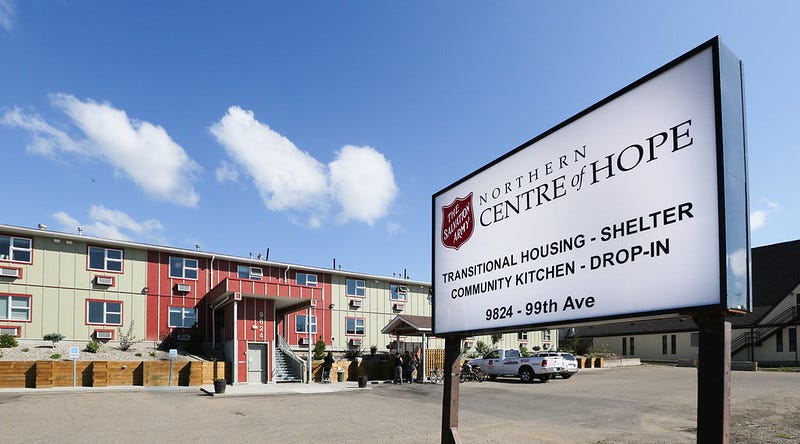
In her presentation at the Feb. 23 regular Council meeting, Anne McMenamin from the Fort St. John WorkBC Centre discussed how they help individuals facing multiple barriers get job ready. Through programs like Employment Connections, they offer funding for assessments (especially when employment is the goal), resume and cover letter workshops, skills training, and tailored supports to overcome obstacles like undiagnosed needs, stigma around seeking help, or simply not knowing how to navigate the system. Referrals often come from places like the Salvation Army’s transitional housing, making it a natural handoff once someone has stability.
CRCHES is building on these kinds of connections – collaborating with BC Housing, Northern Health, nonprofits, and WorkBC – to advocate for expanded resources, test regional approaches like scattered-site housing or co-ops, and push for better provincial support. It’s a shift from crisis response to prevention and reintegration: stable housing opens the door, but the right employment supports help people walk through it and stay on their feet.
“Right from making sure they’re ready, and have the training, even just to complete the interview process and securing employment – it’s not just about sending out resumes,” Bolin explained during our conversation.
In a community like Fort St. John, where economic pressures and limited options make every step harder, this collaborative work matters. It’s not a cure-all overnight, but it’s deliberate progress – and it’s also an effort that’s never done, says Bolin. Council proposed the committee, knowing it wasn’t a one- or two-year plan, it was for the duration.
“I wouldn’t wish it [homelessness] on my worst enemy. So, I think that’s the importance of us continuing to push forward, is so that that isn’t people’s only choice,” Bolin said.
“They shouldn’t have to, in this day and age, choose between having a shelter over their head, food to eat, raising their children – these are things that many of us take for granted – these folks are seeing a completely other side of what any of us, thankfully, ever have to see. Compassion is going to go a long way.”
