
Stepping Into Her Shoes: Peace Region leaders take on low-vision challenge
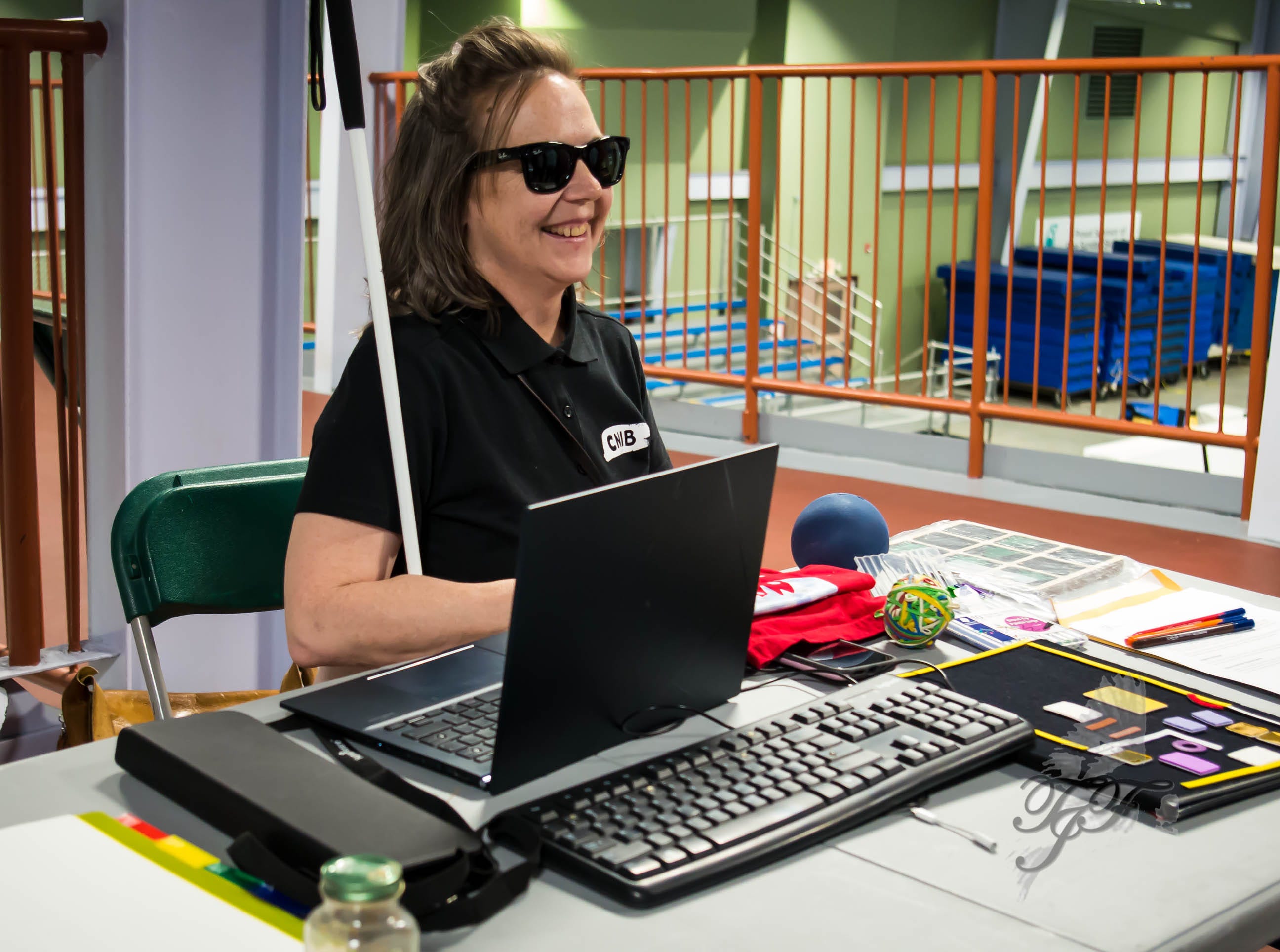
If you’re able-bodied, with 20-20 vision and good hearing, you probably don’t think twice when it comes to walking around town. You can easily navigate the sidewalks, business entrances, cross all the intersections in the time allotted by the crossing signals, and enter and exit buildings with ease. Grocery shopping likely only presents challenges when the store is out a particular product.
But what if you suddenly find yourself less than able-bodied? What if your vision is impaired or you’re completely blind? What happens then?
That’s the question Edwina Nearhood has been answering since losing her eyesight during a heart-transplant four years ago. Not only did she have the physical recovery from the transplant itself, but she was unceremoniously plunged into a world that was both familiar and foreign.
The community she’d lived in most of her life was still here. Her friends and family too. Yet because of her blindness, doing the things most of us take for granted is a far different experience for Nearhood than it was prior to 2022.
At the same as she’s learning to navigate daily life without vision, Nearhood is helping others understand the challenges of all kinds of accessibility issues.
As a member of the Northeast British Columbia Collaborative Accessibility Committee, known as Northeast Accessibility, Nearhood works with people such as Lori Slater, who has been advocating for better accessibility for those with disabilities in the region since the 1990s. Disabilities, including mobility challenges and low-vision, can make accessing buildings, recreational opportunities or even walking down the sidewalk difficult, depending on the nature of the disability.
Part of the work of Northeast Accessibility is raising awareness about these challenges and encouraging local governments to improve accessibility in their communities for the benefit of residents and visitors alike. One of the ways the committee raises awareness is through the annual National AccessAbility Week which the City of Fort St. John recognised this past week.
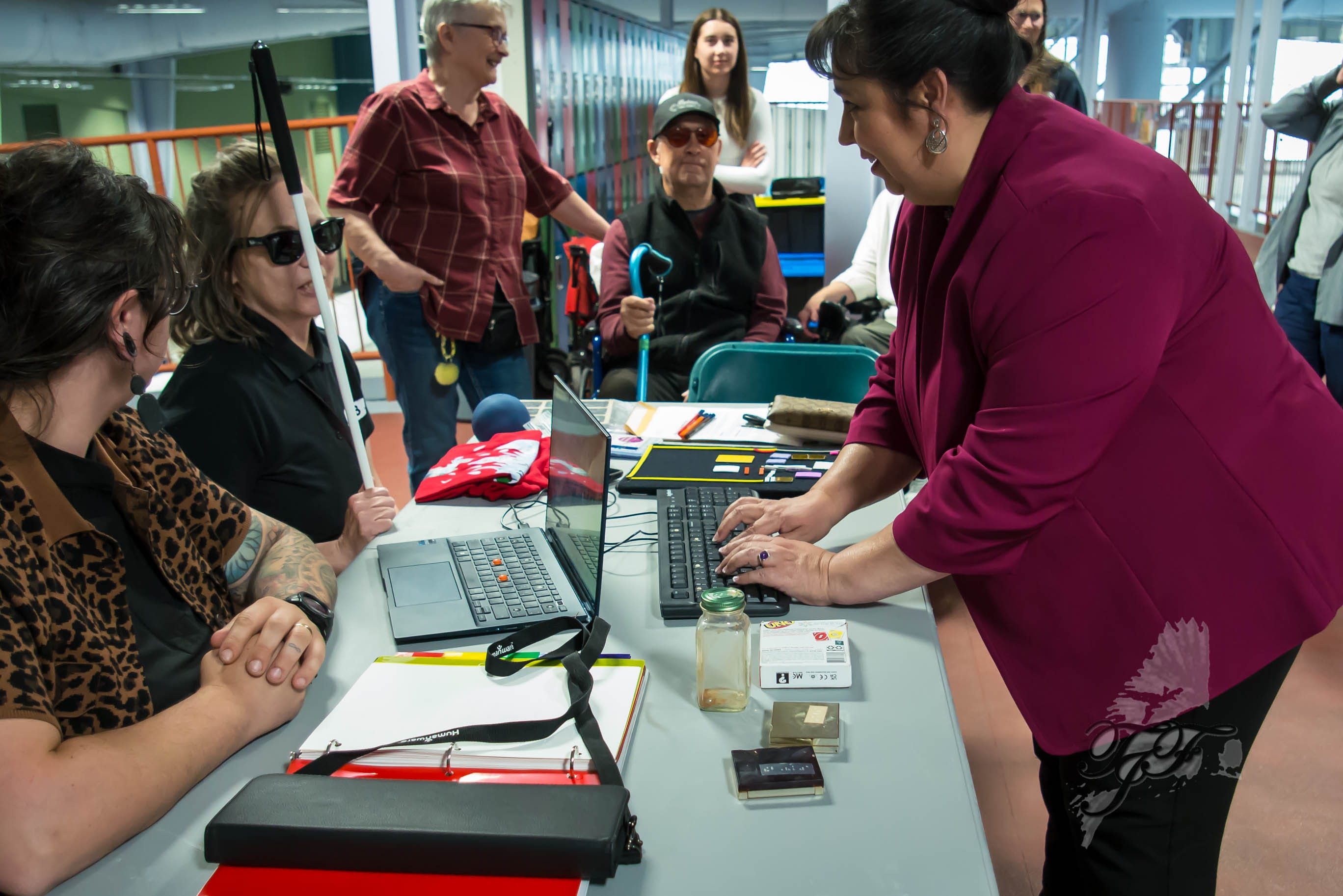
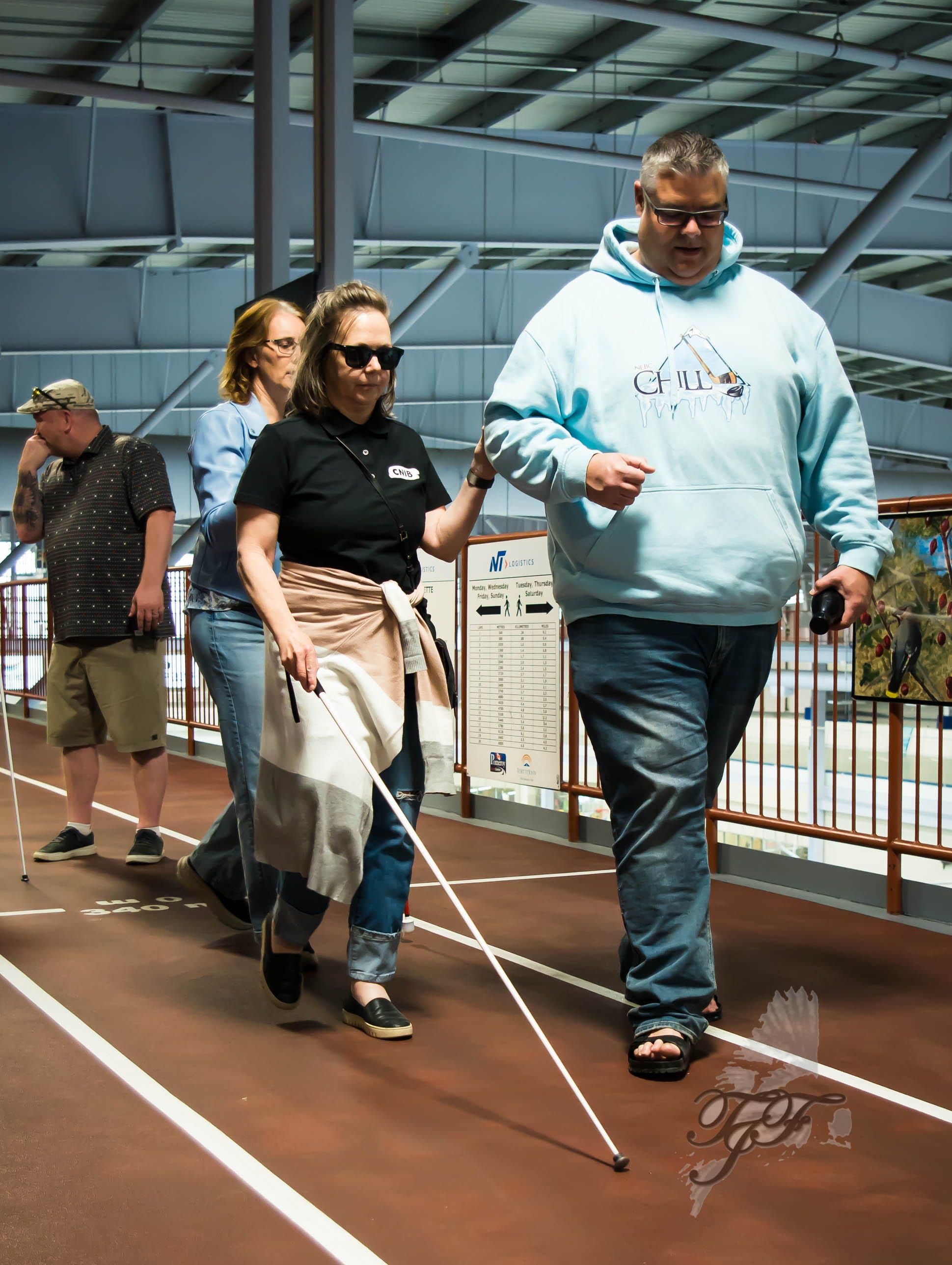
Nearhood organised a Try-On event at the NVT Logistics Walking Track in the Pomeroy Sports Centre on June 2, where the mayors of Taylor and Fort St. John, along with a couple of Fort St. John city councillors came out to learn about the challenges she, and others like her, face in navigating the city.
In addition to low-vision goggles and canes for people to try, Nearhood demonstrated some of the piece of technology that are enabling her to navigate her world more easily.


Modern smart technology is proving valuable to Nearhood, through apps on her smart phone, and Meta Ray-Ban sunglasses. The video feature has proved helpful when Nearhood needs directions while out “navigating in the wild,” as she calls it, or assisting her at the grocery store. When she needs help, she can either call a friend or volunteer agent using the Be My Eyes app.
However, although the apps can provide Nearhood with directions and orient her if she gets lost, she must navigate the old-fashioned way with her cane, when walking around town and crossing the street.
Improvements in the pedestrian crossings that the City installed when re-vamping 100 Street are welcome and helpful, but not all intersections have lights that change at regular intervals. And because of how Nearhood uses landmarks – like a building or the crossing button with the letdown – sometimes there’s not enough time for her to get properly oriented before the light changes. This poses a challenge, but Nearhood feels this will get easier as her skill in navigating the wild improves.
Right now, her goal is to walk from the Cultural Centre to the Royal Bank on her own. Travelling on the west of 100 Street is easier than the east side, Nearhood says, because of the landmarks she uses.
“If there was a push button on every corner to the immediate right of the let-down then I could line up and safely cross using the audible signal,” she explained.
At the Try-On Event, Fort St. John’s Councillor Tony Zabinsky and Mayor Lilia Hansen tried the low-vision goggles. Zabinsky armed himself with a cane and took off around the walking, managing to complete a circuit without mishap. Hansen opted to try using a human guide and set off around the track with Councillor Byron Stewart as her guide.
Taylor Mayor Brent Taillefer got a lesson from Nearhood herself on how to guide a person with low vision, as she demonstrated how easily one can drift off course without landmarks or a guide.
Before they commenced their trek, Taillefer asked Nearhood if she had any thoughts on how his community could improve accessibility.
While Nearhood said she hadn’t been to Taylor recently, Lori Slater, who also turned out to the event, spoke to the critical need for wider infrastructure, like properly placed ramps to ensure smooth building access for wheelchair users.
Ensuring municipal leaders hear these exact details is a key goal for Northeast Accessibility. The committee is continually working to bridge the gap between residents and local governments across the region, and they welcome ongoing feedback from community members at accessibility@fortstjohn.ca.
As for Nearhood, her own journey of navigating the wild, and sharing it with the public, continues. Local readers looking for a deeper dive into her post-transplant experiences can find her regular insights in her Blindscentz column for the Alaska Highway News.