Some flexibility in design, but no Plan B for FSJ’s new aquatic centre
Upcoming meeting agenda reveals funding scenarios that may allay residents' cost concerns
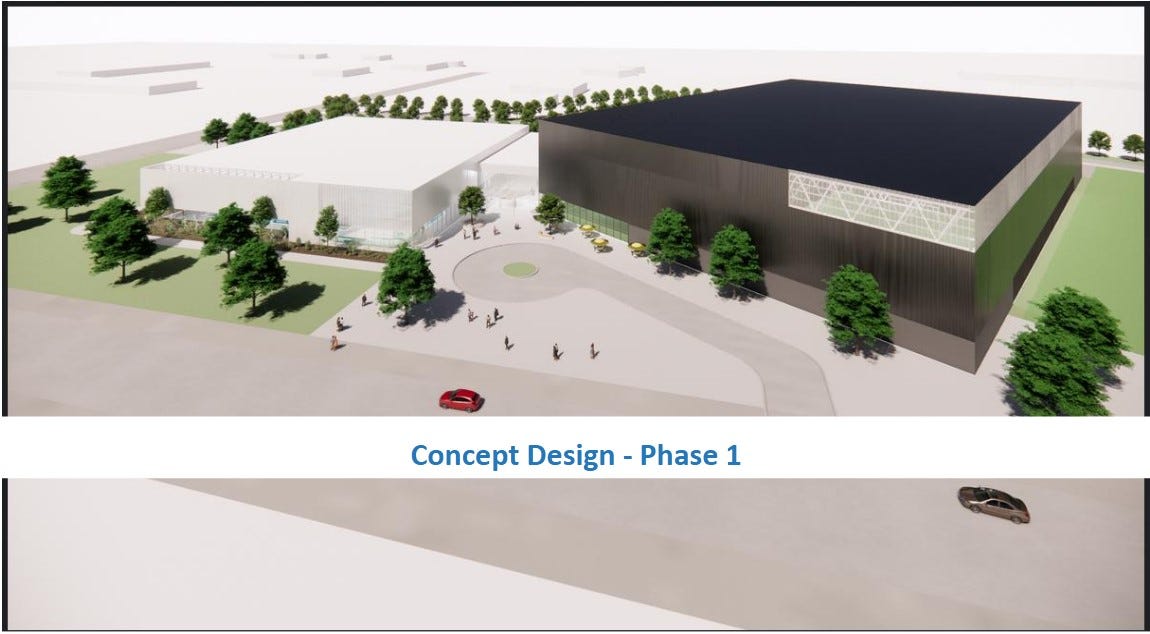
FORT ST. JOHN – Since taking over the pool replacement project last summer, the City of Fort St. John has been making serious waves towards getting a new facility built.
In just a few months, the City’s working group threw out the previous proposals and estimated project costs, received a generous donation of land in October 2025 on the West Bypass Road across from Margaret Ma Murray Community School for the facility, and heard from local sports organizations about the sports and recreational needs of the community.
Despite the forward momentum on the project, a question from the public during the March 9 regular meeting revealed that the City has no Plan B, if the proposed project doesn’t pass the scheduled October referendum.
There is some flexibility in the design, as councillors suggested at the February 23 meeting, when discussing whether to proceed with including the top three features identified through the engagement process, and presented to Council by the working group.
The top features, as determined by the Vote 4 Features Dive and Decide survey were the Ninja Cross course, Indoor Rock-Climbing Wall and a second waterslide.
“I support the idea of including them in the cost assessment, not committing to it – like we’re either going to build it with all this stuff included or we’re not going to do it at all – so if that’s what that means, then I’m certainly in favour of it,” said Councillor Gord Klassen.
Councillor Byron Stewart agreed, adding that these features should be included in the design, but “if we need to make cuts once we know the full cost, we can make those cuts.”
Council agreed to go ahead and include the three extra features in the design and cost projections – if the funding is there – but will otherwise stick with the “meat and potatoes” of the design.
Thanks to the new rules established earlier this year, residents can ask questions about items on the regular meeting agenda. And because several items to do with the new aquatic facility – the Project Charter, the Integrated Project Delivery Procurement, and the Intent to Pursue Assent Vote for Aquatic Facility Borrowing – were listed on the March 9 Agenda, two residents took that opportunity to quiz Council.
Longtime Fort St. John resident Darcy Bell started by praising the working group’s efforts to put the proposal together but noted that there are people in the community who are against the City borrowing the sum required to build a facility of this size, and plan to campaign against it.
“My question is, do you have a Plan B for when this referendum fails in the Fall,” Bell asked. “Do we have a plan for something cheaper?”
Mayor Lilia Hansen took this question and explained that the City is going forward with a referendum [assent voting], in October together with the municipal election, and there will be only one question on the ballot.
“Is there a Plan B? At this time, I do not have a Plan B, but it’s up to the residents of Fort St. John whether it proceeds as is. If it doesn’t, it will come back to us and we’ll look at things again,” she said.
Although the public question period is not supposed to be a forum for debate, Councillor Trevor Bolin took exception to the notion of ‘No’ campaign and pivoted the conversation away from the question of a Plan B, to address Bell’s past comments on social media.
“Darcy, although you said you’re going to campaign against it, I want to remind you in a conversation we had on a local social media page, your comments were dependent on how much was being borrowed versus how much was being put down, that you could look at affording something like this,” Bolin said.
“Four hundred and eighty dollars a year, that’s . . .,” was all Bell got out before Bolin interrupted:
“Who says it’s $480 a year? No prices have ever been released.”
“Right here, in Agenda Item 12.6,” Bell replied.
Bolin and Councillor Tony Zabinsky noted that the amount quoted was an approximate amount of $30 to $40 per month increase in property taxes that some residents said they could afford to allow the project to progress.
Bell maintained that $30-$40 a month was “a lot of money.”
Bell wasn’t alone in his concerns about the as yet unknown price tag for the aquatic facility. Concern over the impact of tax hikes to cover the costs of the project was also expressed by resident Ron Wagner.
“If you’re considering a significant tax hike for a large expenditure, has there been any research into what that potential tax load increase might result in future foreclosures in the community? Those that don’t make their mortgages because their tax rate went up,” Wagner asked.
“If we’re going to spend more money, we’re going to need to collect more money.”
“What I can respond to, is it will be the residents of Fort St. John that will make a democratic vote through a referendum,” said Hansen.
“Well then, I think Darcy’s right and you need a Plan B,” Wagner replied.
Crisis averted as report reveals lower projected costs:
In keeping with the speed that the City’s working group has maintained since taking over the aquatic facility project, while Wagner’s parting words were ready to be published, the City published its Agenda for the March 23 Committee of the Whole meeting.
Lurking quietly in that agenda, are the Capital Costs and Funding Scenarios for Fort St. John’s new pool.
According to the numbers scheduled to be presented by Chief Corporate Services Officer, Lucas Panoulias and Director of Community Services, Kyah Bryde on Monday, Bell, Wagner and other concerned residents have little to worry about when it comes to the cost of the project.
Pegged at $185 million, the City plans to borrow between $60 million and $90 million, with the remaining funding coming from various streams including the Peace River Agreement Funds, City Reserves, Regional and Senior Governments.
Depending on which funding scenario is used, residential property taxes will increase between $17.68 per month (scenario one) through to $26.53 per month (scenario three). Businesses will see increases in their property taxes per month of $137.41 to $206.10, depending on the funding scenario.

