
Paving the way: Premier, Mayor talk infrastructure & training the next generation
The BC North Peace received some long-awaited attention this week as Premier David Eby made his first official visit to Fort St. John.
Mayor Lilia Hansen and Council invited Eby to visit the city and sit down with Council back in September at the Union of British Columbia Municipalities conference, to talk about the area’s concerns in a more relaxed format than that afforded by the 15-minute speed-dating style sessions at UBCM.
Hansen said she was glad Eby was able to make the trip, “because there’s nothing like being able to describe things after he’s actually seen it; be here in the community and get the pulse from the residents.”
Because he drove up to Fort St. John from Dawson Creek, Eby was able to experience the Taylor Bridge firsthand, and Hansen hopes that will deepen his understanding of the issue with this key piece of infrastructure.
“There’s nothing like taking people across the Taylor Bridge for them to say; I support your resolution now, more than ever. It’s something that’s vital.”
The bridge wasn’t the only infrastructure concern on Council’s mind.
“We also talked about the importance of rail, of supporting our neighbours up in Fort Nelson,” she said. “They’ve got amazing fiber and wood up there; and here we have mills closing.
“We’re talking about the importance of making sure, using that influence, that the rail lines are upgraded. They need to be upgraded not just kept where they are. We need them upgraded so they can carry more capacity.”
Currently, trainloads are going up to Fort Nelson at 60 percent capacity, and at slower speeds, because of the state of lines.
Council had the opportunity to discuss other issues with the premier while he was in town, including healthcare, education, manufacturing and projects going on in other parts of the province.
Healthcare and Peace Villa were among the top concerns, with Hansen noting that Peace Villa “isn’t just a want or like a nice to have. This is a need. This is a serious need. And we have the statistics to prove it.”
The waiting list to get into the Peace Villa Residential Care facility has consistently had 85 to 125 people on it, not just local seniors, but those from Fort Nelson too, which doesn’t have its own long-term-care facility and must rely on facilities in Fort St. John for that level of care for their seniors.
But funds for the expansion of Peace Villa weren’t listed in the provincial government’s most recent budget, nor are they in the 10-year budget, Hansen said.
In the meantime, Hansen, along with Peace River Regional District board chair Brad Sperling, and Dawson Creek mayor Darcy Dober have formed a healthcare committee, and are exploring another LTC-facility model that Northern Health has used with a non-profit organisation called Providence Living.
These LTC facilities in other communities are owned by Providence Living, with Northern Health working in partnership on the financing side.
“The big bonus is the cost of the build is way lower than what the Northern Health numbers were at,” Hansen said. “So, it would still be something that our regional residents would pay towards, but this is something we can do at a more affordable rate and get it across the finish line years faster.
“I understand when there isn’t money in the provincial budget, but it isn’t something that we can just stop, because we continue to age.”
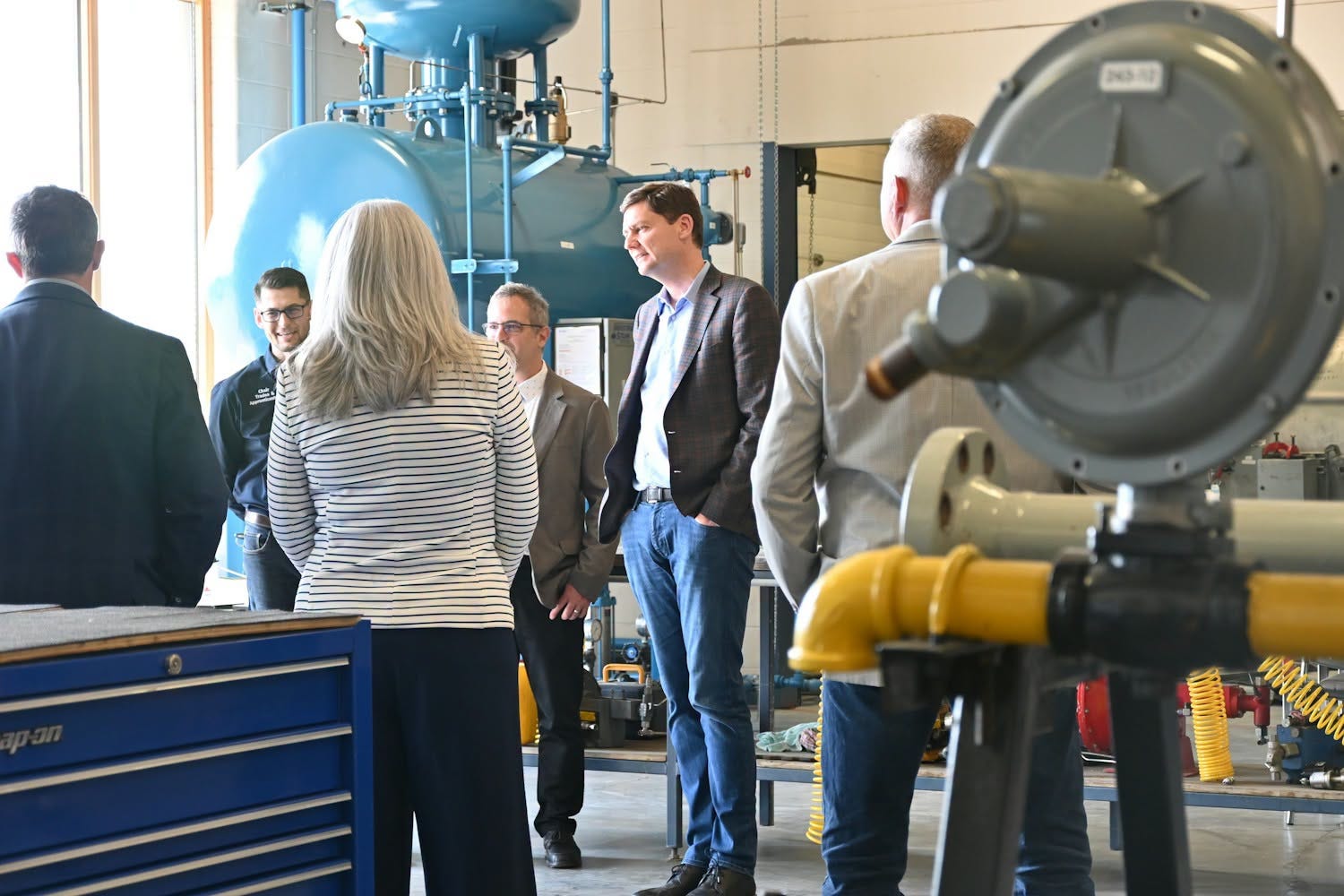
The discussion of seniors’ healthcare naturally flowed into healthcare overall, and by extension, education, thanks in part to a last-minute visit to Northern Lights College by Eby and Council.
Hansen was “delighted” that the premier’s staff made time for the stop at NLC to tour the healthcare lab and the trades department.


Northern Lights College has a strong leadership team, who have been able to pivot to meet the needs of the region, as well as those of industry and business. Hansen describes the types of courses offered at the college as fantastic, with two new healthcare courses starting soon, including pharmacy tech, which begins in October.
“We’re trying to build those pillars and supports for what we need for healthcare. And then on the industry front, there are so many trades that we’re going to need today but also going forward.”
They discussed the importance of supporting trades and education, especially when it comes to economic development and meeting the workforce needs of current and proposed projects in the province, such as the pipeline from Alberta and the mines in northwestern BC.
“We need to have the skilled workforce, so what are we doing to meet that demand – because we know it’s only going to increase over the next few years.”
While the proposed pipeline from Hardisty, AB to Vancouver won’t go through the Peace Region, it’s here that the companies with the equipment and skills to build such projects are located. Fort St. John’s own Surerus Pipeline for example, is currently working on several projects around the province, including Woodfibre LNG.
There are so many different skills and trades needed for the province to prosper and grow, Hansen said, education that is only offered in the Peace.
“Whether it’s for aviation, whether it’s as an oil field operator, whether you’re learning as an electrician or carpentry – these are all trades that we need.”
While other municipalities see their colleges closing or amalgamating, the responsiveness of NLC, and tailoring their classes to local economic needs, classes are full in the Peace Region.
Being able to find educational opportunities at home, increases the likelihood that students will remain in the region once they’ve completed their training. Time and time again, students who leave the North to pursue educational opportunities put down roots where they land. Hansen wants to “keep families together, to build that skill and knowledge base and have it here in the region where the work is happening.”
She said that Eby was impressed by all our local campuses have to offer students who want to stay in the region for their education and help build the economy and communities.
Keeping the businesses that are already in the community is important and goes hand-in-hand with providing the training needed to keep those businesses running. But Hansen told Eby that she would also like to see other opportunities for industry and manufacturing come this way.
“We have access to electrification, which is a big thing for any new projects or even in our industrial park,” she said. “We have a lot going for us here.”
Overall, Hansen came away from the meeting with Eby feeling positive, saying it was a “respectful dialogue”, and she was pleased to be able to relate to Eby the concerns Council has been hearing from residents.
“I think with the change in global economy needing to see we need to be more self-reliant, even to have the news for the Alberta pipeline going through, I don’t see it as the same government it was eight, nine years ago.
“That said, I want to see shovels in the ground. To me, you can make all sorts of hopes and promises, but until the work actually goes ahead – for instance, going back to Peace Villa. I sincerely would have put $100 down to say this is going ahead, this is happening. And I’m told it still is. They’re just looking at other options.”
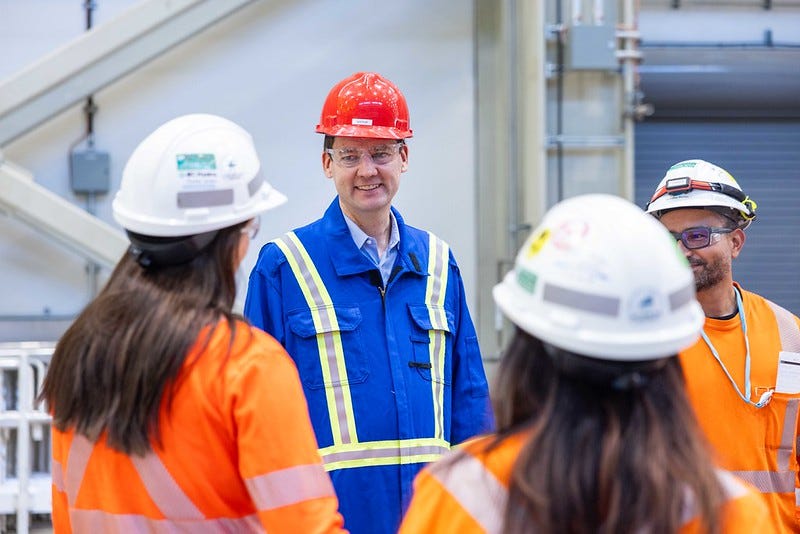
In addition to meeting with Mayor and Council, and touring Northern Lights College, the premier also toured the John Horgan Dam and Generating Station (formerly known as Site C), which officially reached full power generation in August 2025.
Harking back to Hansen’s comments on regional industry and manufacturing Eby used a press conference at the dam to describe the facility as a remarkable feat of engineering; one that is “contributing 1,100 MW to our electrical system at a time when we need it.”
“The reality of the modern economy that we’re seeing is that the more electricity that we have in British Columbia, the greater our economic advantage, because we can deliver cheap, reliable electricity, compared with other jurisdictions,” Eby said.