In Conversation: Milobar on why the Northeast is key to BC’s future
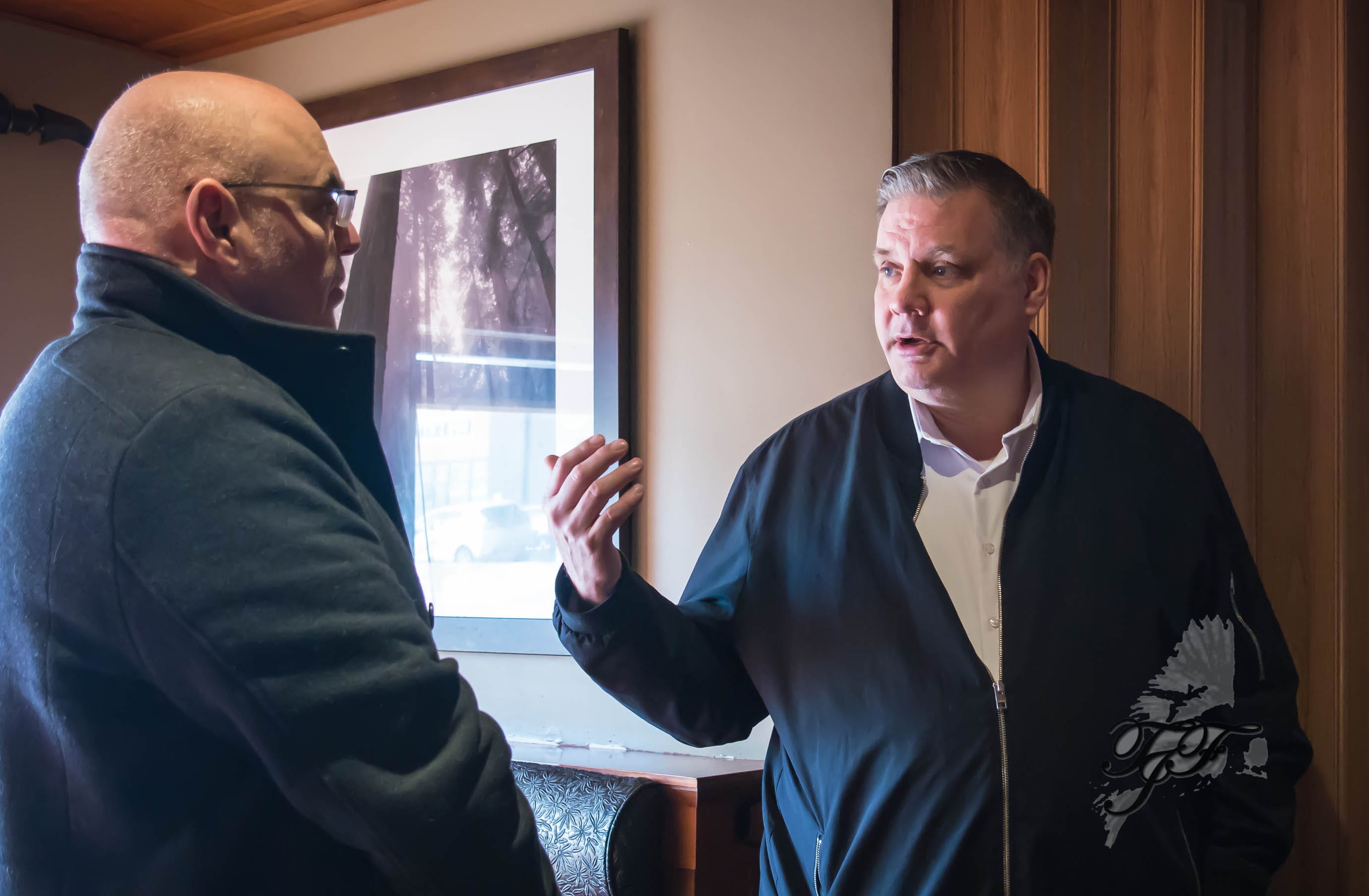
FORT ST. JOHN – Unlocking the natural resource power of Northeastern British Columbia is critically important for the future of the province, Conservative Party of BC leadership candidate, Peter Milobar told the broken typewriter on March 15 ahead of his morning event at Audielicious in Fort St. John.
That natural resource power needs to be unlocked, not just for the province, but for the nation, Milobar added.
“It’s really about unlocking, permitting, getting government out of the way, creating a tax structure in an environment that actually attracts investment. that spillover is that then the investment in communities is that much easier and impactful.”
It’s not only what’s in the ground that makes northeastern BC the key to the future of the province, but the people of the North themselves.
The Fort St. John and District Chamber of Commerce put out a video recently which notes that the Peace Region has the highest per capita number of entrepreneurs in the country. At the same time, WorkBC reports that the northeast has the highest unemployment rate in the province.
When asked about this dichotomy, Milobar replied that it speaks to the opportunity and entrepreneurial feeling that exists in the North.
“So, if we get the right incentives in place, the right tax structure in place, the right mindset of government to get government out of the way and let those entrepreneurs thrive and shine, then I think that’s exactly what you’d see happen is that employment would be on the rise in the north and the northeast and that would be good again for the province as well as the communities in and around here.”
Kamloops, where Milobar is the MLA for Kamloops Centre and served on Kamloops City Council for nine years before entering provincial politics, like northeastern BC is a resource-based economy he says which he believes gives him a unique insight into how things work in this part of the province.
“I’ve been a small business owner, so I do understand, within the constraints of what we’re going to be facing, how to actually deliver results,” he said. “I can talk in these communities with authenticity because I actually do understand what they are talking about.”
But he can also put on a suit and tie, go into a boardroom in Vancouver and talk to that business community with credibility.
“I think I’m uniquely positioned in this race to be the one that actually can kind of bridge that urban-rural divide.”

The urban-rural divide shows up in how healthcare is treated in BC, such as in the recent government “postponement” of six long-term care projects throughout the province, including Fort St. John’s Peace Villa expansion.
These cancellations show that the government isn’t willing to view the whole picture, Milobar said.
“They’ve way overspent on capital projects down in the southern part of the province. As a result, they’ve had to now withdraw and remove things like six long-term care facilities, one of which being up here, which has a knock-on effect.”
Those knock-on effects include forcing seniors to live in unsafe conditions in their own homes for longer than they should or backing up in acute care rooms in hospitals instead of moving into long-term-care, which in turn puts pressure on the emergency room.
“The fact they haven’t managed those capital projects properly is what’s actually created this problem and then they seem to pick on smaller communities and farther-flung communities and frankly seniors.
“We’ve seen that across the board in this budget in terms of property tax deferment programs and changing interest rates. They’re getting rid of the $200 homeowner grant for northern residents. They’re adding tax on landlines and on basic cable. It’s one hit after the other for seniors and people on fixed incomes in this budget.”
It’s not as though people in the North Peace are asking for a SkyTrain, Milobar pointed out. People rightfully need and want help from the government on projects that are important to their community.
“Be it the long-term care facility that’s been cancelled or the Taylor Bridge, it never seems to go anywhere,” he said.
“You know, I get asked all the time about the Taylor Bridge. When people say, well, it’s going to be expensive, who’s going to pay for all that? I say the same people that pay for the Patullo Bridge. It’s a provincial asset, it’s a provincial bridge, it’s a critical economic corridor. It needs to be replaced. Everyone agrees it needs to be replaced, so let’s just get on with it.
“Same with the long-term care facilities. The seniors still need help and support. Just because it’s the northeast doesn’t mean they shouldn’t still get reasonable access to long-term care and this government solution because they mismanaged projects in other parts of the province is to cut that away and it’s not right.”
Peace River North MLA Jordan Kealy has been vocal about repealing the Health Professions and Occupations Act, also known as Bill 36, which takes effect on April 1. Milobar agrees with Kealy that it must go.
“I’ve disagreed with it from the get-go. It should have never been brought in. The way the government brought it in was very underhanded. They forced closure. We’d barely been through a third of the bill asking questions about it. So, there was two-thirds of the clauses that no one even got an explanation from the government about how it would work,” Milobar said.
“We actually tried getting the government to agree to at least let those clauses, even though it had been passed, still have questions and answers about it. It wouldn’t have changed the outcome, but at least people wouldn’t know what the government was intending.
“The government even refused that. I’m not a fan of it. It needs to go. It should have never been brought in in the first place.”
The new leader of the Conservative Party of BC will be announced at the Leadership Convention on May 30.
To be eligible to vote, you must be a member in good standing of the party by April 18, 2026, at 5 p.m. PST. Each member will have one vote in a preferential (ranked) ballot, conducted through a secure, online system, according to the Conservative Part of BC’s website. A candidate must win more than 50 percent of the total province-wide vote to be elected leader.
For more information, visit the Conservative Party of BC’s website.
