
In Conversation: Findlay on Northern dichotomy, importance of experience for a leader
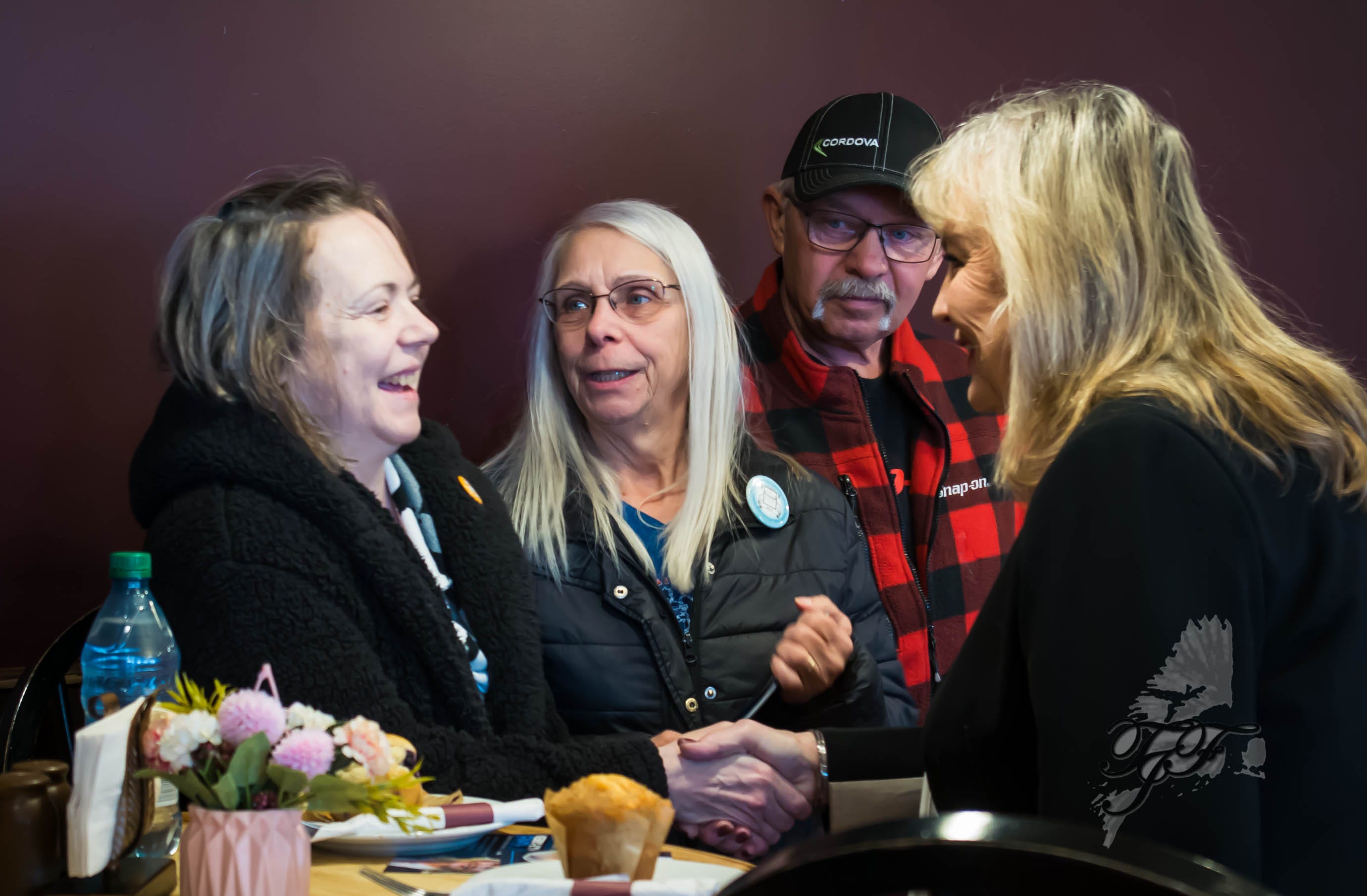
FORT ST. JOHN – The Peace River Region, with its variety of industries, resources, and hard-working citizens is an area that the province is lucky to be able to claim as its own, Conservative Party of BC leadership candidate Kerry-Lynne Findlay told the broken typewriter following her morning meet and greet at Whole Wheat & Honey on April 4.
But unfortunately for both the region and the province, the government has been “sunsetting” industries like mining and forestry that are centred in the North, she said.
“I think what’s also happening is we do not have a government that’s listening. They don’t visit enough. They don’t talk to the locals enough.
“I’m not sure why the government isn’t listening, because I don’t think they’re listening in a lot of areas. Certainly not in the development of our resources.”
Our conversation came on the heels of Findlay’s meeting with Mayor and Council, where she heard their concerns about the government’s fixation on these “sunset industries”.
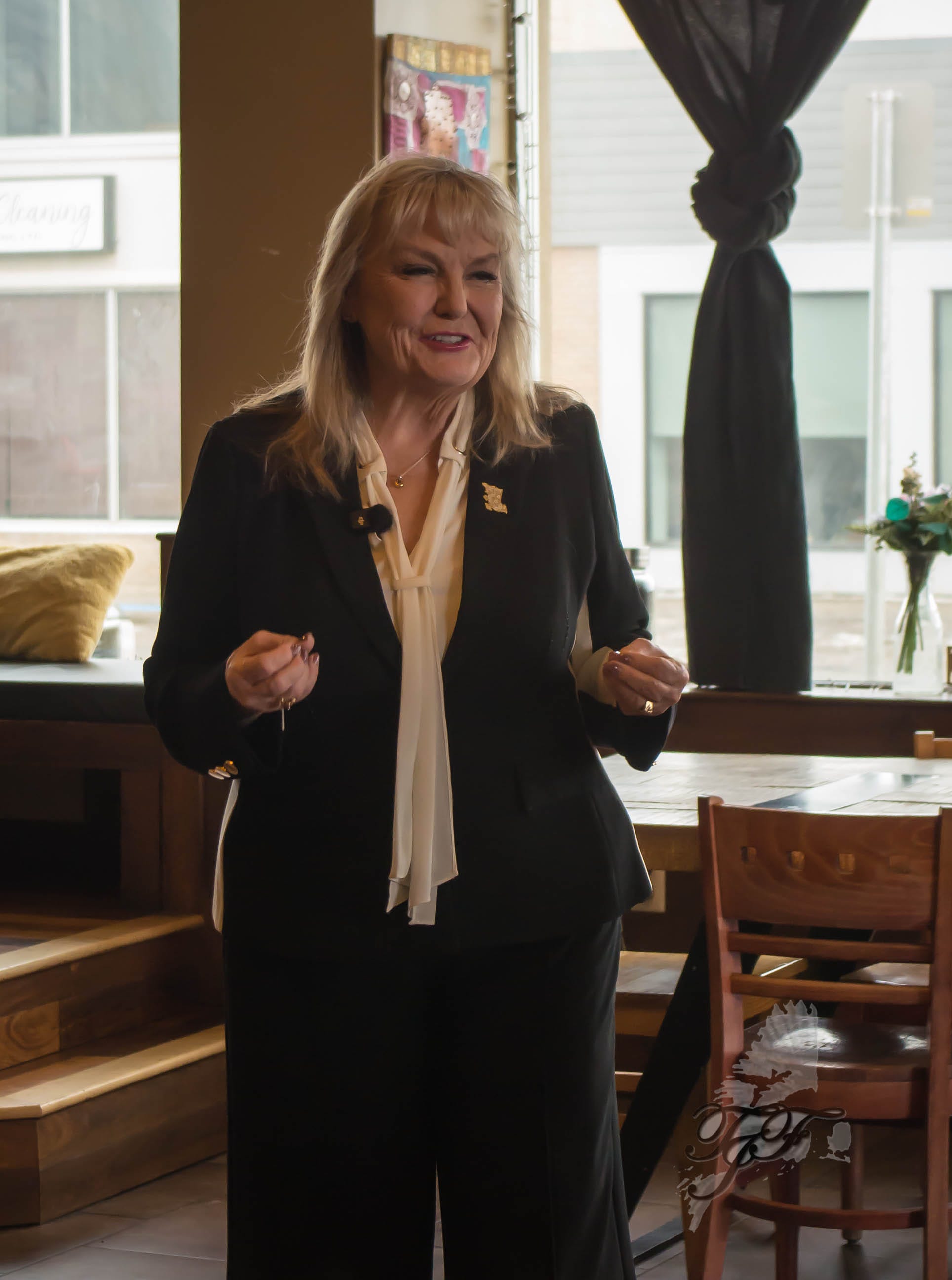
“One of the things she [Mayor Lilia Hansen] was talking about is that when she was south for the Union of BC Municipalities meetings that the provincial government kept talking about the sunset industries.
“Well, if you decide it’s a sunset industry, you don’t care about those good-paying jobs. If you don’t want to unleash your resources for prosperity, I guess it’s a sunset industry. But it doesn’t have to be, right?” Findlay said.
The North is extremely important to the province, she continued, and having dialogue on the ground, in the region is key.
“You’ve got to be doing what I’m doing right now, which is visiting, talking, hearing from people, actually discussing these issues. How else are you going to know what the needs are?”
The government’s tendency to ignore elected representatives from the region isn’t helping.
It’s the job of MLA’s “to bring these local issues,” Findlay said. “But if you’re not listening to them either, then you really don’t know.”
When the broken typewriter asked Findlay how she would resolve the regional dichotomy of the highest unemployment rate in the province with the highest-per-capita number of entrepreneurs in Canada, to enable northern businesses to get things moving, she said that her government would respect risk and entrepreneurship.
“Entrepreneurship, by its definition, involves risk-taking. It involves investing your own time, money, and resources into building a business. That is where we can find a lot of employment and a lot of opportunity.”
When a government just keeps layering on rules, regulations, red tape and more paperwork, they drown small and emerging businesses in a regulatory matrix that’s hard to deal with, Findlay who has been self-employed, pointed out.
“It discourages entrepreneurs, and it discourages investment,” Findlay said, adding that the reason people become entrepreneurs is because they’re innovators or they see a niche market.
“If we want to be open for investment, and if we want entrepreneurs to stay here with their great ideas, . . . we have to respect what they are bringing to the table.”
Findlay says the government isn’t listening.
“They have their own thoughts, their own ideologies they’re pursuing. That’s where they prioritise government spending. Governments don’t create wealth. They prioritise spending of our taxpayer dollars.”
“It’s been said that the problem with socialism is that sooner or later you run out of other people’s money. And that’s where we’re at right now.”
The much-needed replacement of the Taylor Bridge is an example of the government not listening to the needs of locals and of selective spending priorities.
“First thing I heard when I was coming here is about Taylor Bridge. It’s both a local and a provincial issue because obviously, it’s a local bridge,” she said. “But infrastructure, the lack of replacement of some essential infrastructure – it’s an issue throughout the province.”
Findlay believes that her credentials as a Member of Parliament in Stephen Harper’s Conservative government, her role as Minister of Revenue and Party Whip, make her uniquely qualified to both lead the Conservative Party of BC and the province as Premier.
“I am putting myself forward for the leadership because I am a conservative, not by convenience, but out of conviction. This is who I am. I think I have some really good ideas, and I think that those are ideas that will benefit Peace River North and benefit the whole province.”
People in BC are suffering because of unaffordability, high taxes, and job losses. Findlay has heard stories from people across the province whose hopes and aspirations are being dashed by the NDP government.
“This last NDP budget was a no-hope budget, I say, because their answer to their overspending and their reckless spending is to say we all need to pay more taxes.
“They upped the tax rate on the lowest income bracket. How is that helping people who are struggling?”
Taking more from people at a time of unaffordability is not a vision for the future, Findlay says.
“I believe with my background as a member of parliament, as a Minister of National Revenue, as someone who’s dealt with justice issues as a lawyer, I can get us back to safer streets and communities. I can get us back to more fiscal balance.”
But it’s not something that can be done overnight. Findlay proposes cutting taxes, like gas tax and taking the seven percent PST off of groceries.
“You need to start making everyday life affordable, and at the same time, bringing up your revenues. You do that by leaning out government, so government isn’t as costly, it’s more efficient.
“We did it in the federal government. If we can do it for a whole country, we can do it for a province. If you can get out of a ‘08, ‘09 recession with debt, and get back to a balanced budget and a surplus, and have enough money, which I did as Minister of Revenue, to run this country, you can do it in the province.”
Findlay believes that leading the Conservative Party of BC is a job for someone with experience, not simply a desire to help your community, which is how she got her start in politics.
“This isn’t an entry-level job.”
British Columbia, Findlay says needs someone who has been tried and tested, and who understands how to navigate between different levels of government.
“Because if you’re talking about leading a province, that means you have to deal with other provinces, you have to deal with municipal governments, you need to deal with federal governments,” she said.
“You don’t want to be standing there for a year, a year and a half, trying to learn the job, on the job, because there’s too much to do, and we have to do a lot of it quickly in order to start turning things around.”
The new leader of the Conservative Party of BC will be announced at the Leadership Convention on May 30.
To be eligible to vote, you must be a member in good standing of the party by April 18, 2026, at 5 p.m. PST. Each member will have one vote in a preferential (ranked) ballot, conducted through a secure, online system, according to the Conservative Part of BC’s website. A candidate must win more than 50 percent of the total province-wide vote to be elected leader.
For more information, visit the Conservative Party of BC’s website.