
Snow sparks optimism for local rancher
Near-record snowfall in December equals 158% of normal SWE in Peace
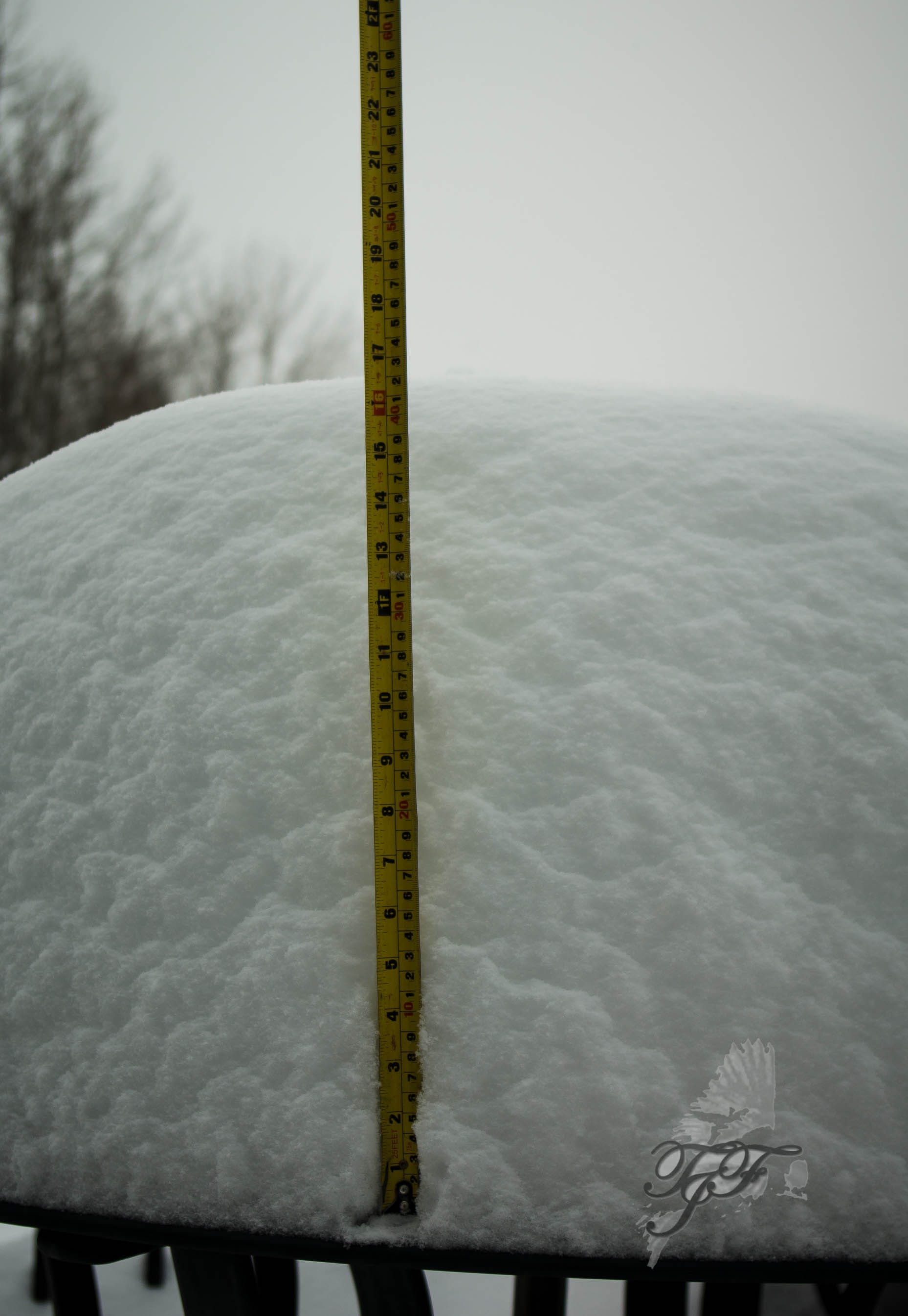
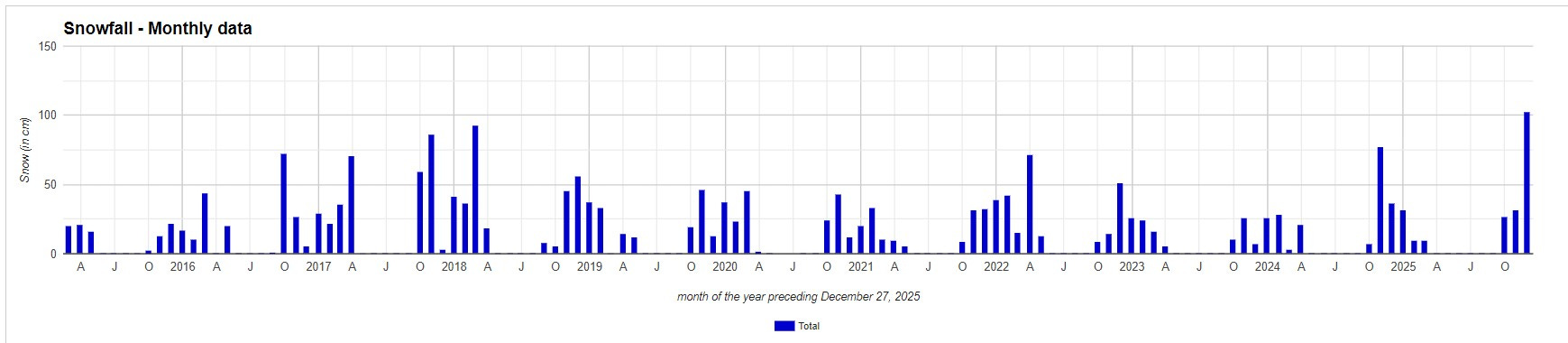
CHARLIE LAKE - Fort St. John has seen more snow in December than in any one month since March 2018, when the city received 93.3 cm of the white stuff.
Now, after years of low precipitation, scant snowfall and subsequent drought, farmers and ranchers are now feeling optimistic as they look forward to the 2026 growing season.
Local rancher and North Peace Cattlemen’s Association president, Braden Sutherland had to significantly downsize his herd in recent years due to the impact of the drought on his pasture and hay production. His crops have also suffered, and several dugouts on his property have dried up as a result.
Yet he’s feeling optimistic, seeing the 103.1 cm – three times the amount that fell in December 2024 - of snow which blanketed the region as of December 26.
“This abundance of snow will be blessing in the spring, I’m certain of that,” Sutherland told the broken typewriter.
“We are all very hopeful, and I’m beginning to believe we have enough snow, even at this point that we will see some positive impacts from this long overdue moisture on our fields, pastures and dugouts in the spring.”
Nadia Mori, coordinator with the Peace River Forage Association was a bit more cautious in her optimism, noting that this winter began under multi-year drought conditions, with November sitting at less than 40 percent of normal precipitation.
“It will take a significant amount of moisture to replenish levels closer to normal – likely multiple years,” Mori said.
“It appears we are receiving good snow here in December, but I have not looked into Snow Water Equivalent (SWE) yet to see how many millimetres of soil water we might have potentially replenished.”
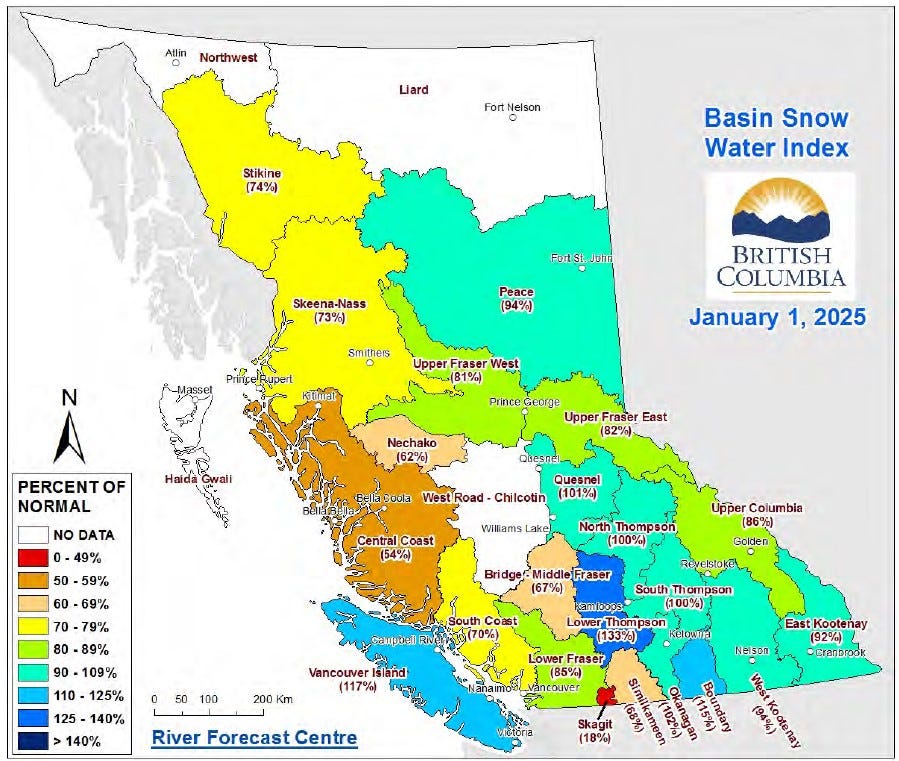
The British Columbia government keeps track of snowfall and precipitation, and the most recent data, as of December 15, 2025, show a distinct improvement in the Snow Water Index over January 2025.
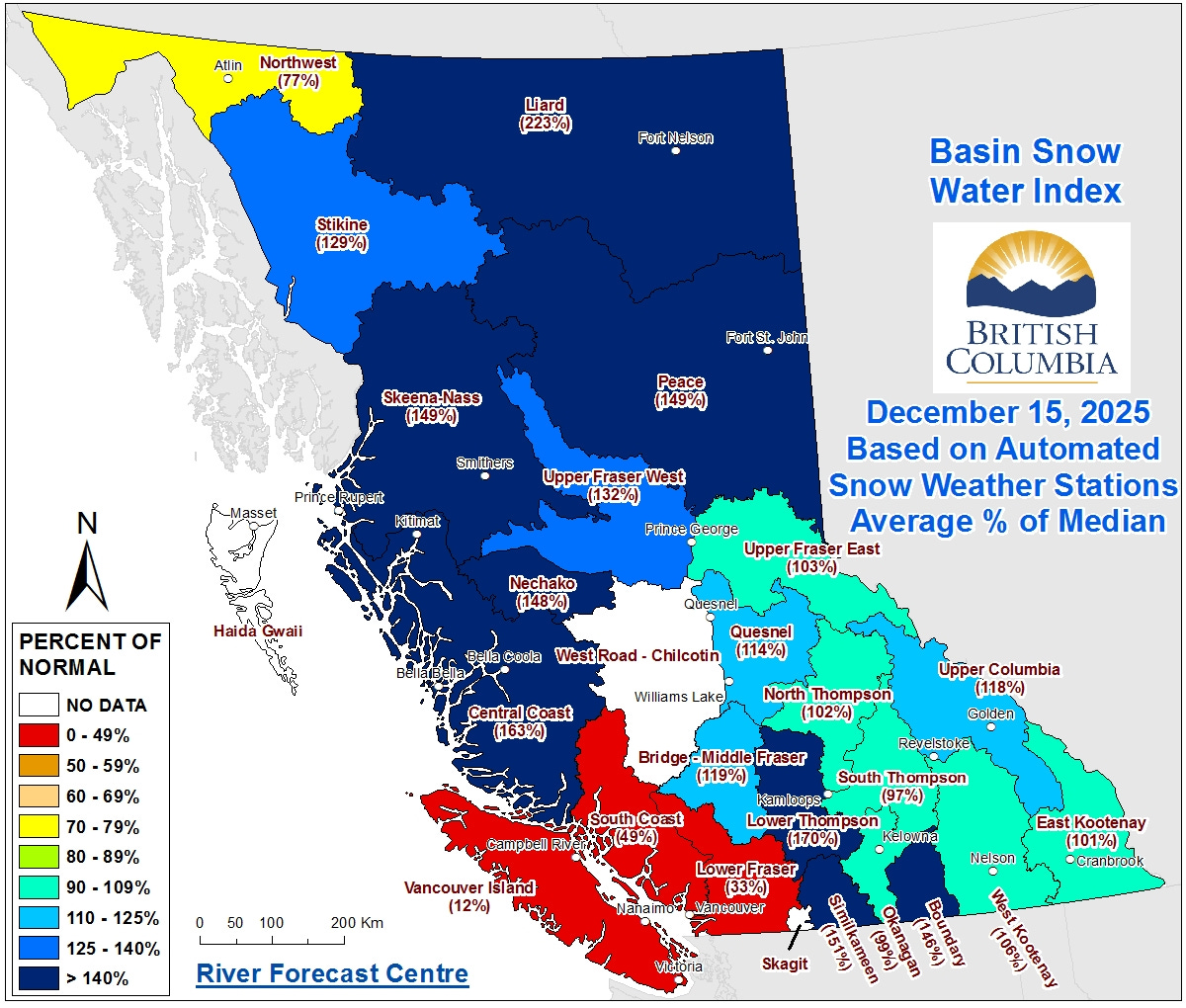
Coming off the 36.6 cm total December 2024 snowfall, the Peace’s Snow Water Index was at 94 percent of normal, whereas mid-month data, ahead of the monthly total of 103.9 cm of snow, showed the Peace sitting at 149 percent of normal.
BC Environment’s Automated Snow Weather Stations (ASWS), show an average of 158 percent SWE in the Peace Region as of January 1, 2026. The average across all ASWS sites is 130 percent of the period-of-record average for January 1, 2026, up from 114 percent on December 15.
More snow is forecast into January 2026, along with low temperatures for at least the first few days of the new year, which will result in more accumulation on top of the already significant December total.