
Rustad promises BC Cons will get “shit done”
“Our government, we’re just going to be focussed on getting shit done.”
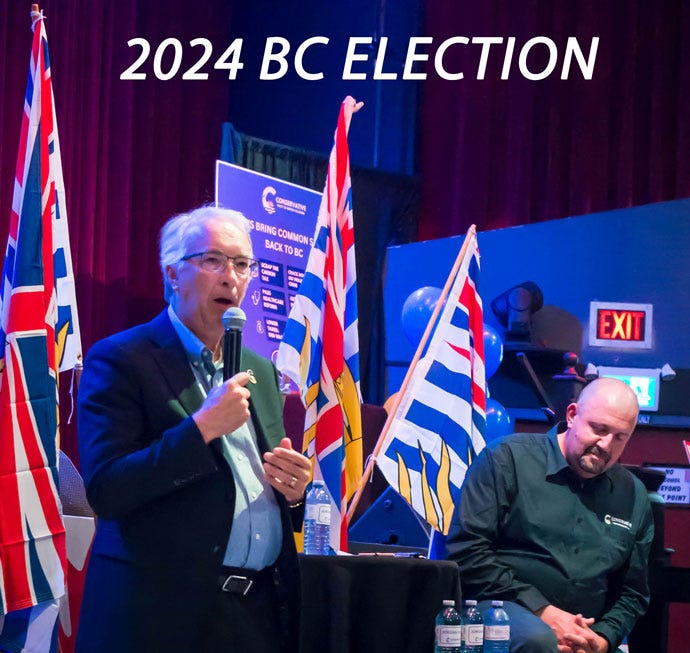
That’s what Fort St. John residents heard last month when Conservative Party of BC MLA candidate Jordan Kealy hosted a meet and greet with leader John Rustad at the Lido.
The BC Conservatives want to get back to the basics, said Rustad, back to common sense and fighting for the average British Columbian.
Peace River North MLA candidate Jordan Kealy says as a farmer and a mechanic, he likes to fix things. Fixing the things that are wrong with British Columbia under the current NDP government is what the Conservative Party of BC aims to do, should they win the provincial election on October 19.
“Most of the time in the North, we get forgotten. I want to fight as hard as I can to do what’s best for our region,” Kealy told the packed gathering at Lido.
Fixing the province is what the BC Conservatives aim to do. By getting shit done.
Rustad said they will eliminate the carbon tax with their first budget. They’re going to address pressing issues throughout the province including addiction, crime, healthcare, education, the economy, the resource sector and agriculture.
And says Rustad, he’s committed to getting the Taylor Bridge done. Every time he drives across it, he thinks: “there’s probably more welds on that bridge than there is original material.”
“It’s not something that’s going to be done on a 10-year plan, it’s something that’s going to have to be done in the first term.”
Kealy called Peace River North a resource-powerhouse.
“Doing that Taylor Bridge, it’s vital for our transportation system. We need to look at investments into our infrastructure, to enhance our resource sector,” Kealy said.
An improved rail line to Fort Nelson is also something the BC Conservatives are looking at Kealy said. The community could be a hub for several different industries if there was adequate infrastructure.
“We have to put this investment in infrastructure back into these areas that need it. It’s vital to have the wealth generated by our resource sector,” he said.
“Right now, there’s so many different areas in our resources that we’re barely scratching the primary resource, we’re not even looking at the secondary resources – imagine what would happen if we actually looked at the different products we could create through the secondary resources.”
Our resource sector is in shambles
British Columbia’s economy has been run into the ground by the NDP, Rustad said. There has been zero growth in the job sector, the only growth has been in the public sector, which has grown from 270,000 to 400,000 employees in the provincial government alone.
“We need to get this economy going again,” Rustad said. “Our GDP prior to the NDP was about 2.5 percent. Since the NDP were in place, the GDP is 1.5 percent. With CleanBC and the process that they’re putting in place the prediction is by 2030 it will be 0.4 percent.”
Gross Domestic Product (GDP), says Rustad, is a measure of our quality of life.
“That’s a measure of our ability to put food on the table and pay rent. That’s a measure of services and the revenue government has to be able to provide those services. It is the measure of how British Columbia performs.”
On top of that, the NDP government is running the largest deficit in the province’s history. Close to ten percent of the budget today is the deficit.
“We’re borrowing from the future to pay the credit card bills. I think that’s just unacceptable,” he said.
The resource sector, which could bring buckets of money into the provincial economy, is in shambles. Rustad says that in the forest sector, no one wants to operate in BC. Same with the mining sector, and the oil and gas industry are also struggling, in terms of investments.
“So how do we get this working? Get our economy back up and rolling again?”
By getting to a place where it’s a single-project, single-permit, he said. “Take out all these layers of permitting, all these layers of bureaucracy and just get back to the basics of making sure that we can get permits done.”
Rustad wants to make forestry competitive again and says the current cost structure is too high.
There are 17 mines in BC that are either permitted or about to be permitted. This represents an investment of approximately $38 billion in BC, which will create up to 30,000 jobs, and add $800 billion to the province’s GDP over the life of those mines.
We need to get to a place where these mines are operating, says Rustad. “Because we need the revenue. We need to be able to pay for the changes we want to make in healthcare, addictions and we want to see significant tax relief.”
In addition to Coastal GasLink, there are three more pipelines permitted to the coast. The permits are set to expire in November, and they’ve already had a five-year extension.
“They cannot apply for another extension. If the permits expire, they have to go back into the environmental assessment process, that’ll cost them between $300 million and a billion dollars per pipe, and another decade to do.
“One of the first things we will do, if we have the honour of forming government, is by Order in Council, give a ten-year extension to all of them, so they don’t have to go through that process again, they’re linear projects that are allowed to go forward,” Rustad said.
The BC Conservatives will also remove the requirement to use electricity for compression.
“We’ll allow them to use natural gas for compression for LNG projects. We’ll work with First Nations on designated sites, to get approval to a place where we can see a project start hopefully every three years.”
All this aims to generate badly needed revenue for the province, while revitalizing the natural gas sector and encouraging investment in the province again.
Rustad wants to double agriculture sector
Two-thirds of the food British Columbians need to survive comes from outside the province. Rustad believes that a government “should be focussed on looking after our own people. I want to see our agriculture sector double.
“In order to do that, we’ve got to dramatically drive down our cost structure, we’re gonna have to do a rethink about our ALR and ALC in terms of how that commitment is there. Most importantly we’re going to have to address the water, water storage, water research, making sure that we have that water available for both agriculture and our personal needs.”
Getting rid of the carbon tax, which is the first thing Rustad says he will do if the BC Conservatives win on October 19, will go along way towards driving down the costs associated with agriculture.
“Whether it’s a changing climate or whether it’s policy changes from outside our border, if there’s a drop in food production – and many jurisdictions are talking about getting rid of nitrogen-based fertilizers, which is where 40 percent of the world’s food comes from – we’re not going to be first on the table for people saying here’s your food. We’ve got to make sure we’re looking after our own people.”
BC students aren’t prepared for university
“Our education system has become focussed on teaching kids what to think, and we need to change that, and teach kids how to think,” Rustad said.
People teaching BC’s kids at the university level are saying that they aren’t prepared and don’t have the skillsets they need. Students need to focus on the basics, he said, no social or political or environmental issues.
“Let’s make sure they have those basics. That’s what education should be about. It shouldn’t be about social issues and environmental issues; it should be about teaching kids to think. Making sure that they’re prepared for the future.”
Healthcare system is broken
“Our healthcare system is in crisis, it’s on the verge of collapse. More money is not going to solve the problem. The system itself is broken.”
Recent emergency room closures are the result of how ineffective the current system is in delivering healthcare to British Columbians. The healthcare should be focussed on the patient. Rustad says that BC needs to not be afraid to say that the system we have isn’t working and look at other jurisdictions in the world to find out why they are having better success than BC is.
“We’re looking at is European models. Models that are universal healthcare, everybody has access to healthcare just like they do today, however, it’s delivered by both government and non-government agencies.”
These models can expand the services that are offered, by better utilizing the professionals BC has, and allow the system to focus on the patients.
“We’re going to set up a patient guarantee for wait times particularly for critical issues like cancer. If you can’t get the services you need in time, in British Columbia, then we’ll purchase those services, whether it’s in another province or country, to make sure that you get the treatment that you need.”
Patients shouldn’t be waiting two months for surgery for an aggressive cancer.
“That’s why we need to make sure that we make these changes,” he said. “It's just the right thing to do.”
“We’re going to do everything we can to expand local services in British Columbia, but most critically we’re going to have to make sure that if we can’t do it, that we put the patients first and spend the money that’s necessary so those people can get treatment.
How does does that solve ER closures, doctor/nurse shortages?
First of all, Rustad says a BC Conservative government would make sure the mandates are gone, that the restrictions will be dropped and then put together a committee to look at compensation for people who were fired.
“Hopefully that will encourage them to come back and work within the healthcare system in British Columbia,” Rustad said. “That’s the first step that we need to do, to get those people back in.
“The second thing that we need to do is help with communities like Fort St. John, we need to be able to attract professionals to work here. To do that, we’re going to have to expand training, both in British Columbia and Canada.”
According to Rustad, UBC’s Medical Program could add an additional 100 people to the program, and they could have done it this fall. Yet he says nobody from the NDP wanted to have a conversation about it.
He plans to enhance the model of incentives to bring healthcare professionals to underserviced areas and purchasing training.
“So that the professionals can get through and get trained, so that we can build service in British Columbia. But in return, we’re going to ask for a five-year agreement in an underserved community.”
Rustad has a similar plan to expand the number of nurses. Registered nurses go to school for four years, and he says that when they get into a hospital environment, some discover the workload is too much because they’re understaffed, it’s very stressful and they end up leaving nursing.
Have them earn while they learn, he says. “Let’s train them for maybe a year and get them into the system, relieving the pressure on our more experienced nurses.”
Nurses can get used to the community and the system as they work through it, and Rustad hopes they’ll be able to do a better job of retaining them.
“All of this is about how we expand those services that we need. There’s much more in health that needs to be done.”
Like stripping away the layers of bureaucracy which are dragging the system down as they’re not focussed on providing services. Close to 40 percent of our nurses today are administrators, Rustad said.
“This has to change.”
A big part of the change must be in the way services are provided for seniors.
“We need to be thinking about we can have more home support for seniors to keep them in their homes longer, to work with families to make sure that seniors have that option to age-in-place, in their homes.”
Make our streets safe for people
Decriminalization and safe supply have created huge problems, destroyed lives and families and are tearing apart communities, according to Rustad.
To address the rising crime, Rustad says he’s going to push for bail reform, and guaranteed minimum sentencing, so that repeat offenders know that there’s consequences for committing crimes. Getting repeat offenders off the streets should significantly reduce crime, and adding more judges and Crown prosecutors should help streamline the court process.
“It has to come to an end. So, we will bring an end to decriminalization, we will bring an end to safe supply. And we’ll get back to a place where police can help to enforce the laws on our streets and make our streets safer for people.”
Rustad plans to utilize everything from doctor-prescribed treatment to short-term and long-term treatment, as well as involuntary treatment for addictions.
“We want to make sure that we’re compassionate, we need to build out care and treatment,” he said. “If there’s somebody who OD’s and is brought back to life, generally they’re at risk of harming themselves.
“I think as a government we should step up to the plate and say they’re not in position to make those decisions, we should make sure that they can go into care, so that they can find a way to get clean and be able to move forward with life.”
Currently there are no options in BC for involuntary treatment, there are also very little options for voluntary treatment, especially in the North and Rustad aims to provide those options to individuals and families.
“We need to be able to make sure that we have these services, that we end decriminalization, end the safe supply that’s making its way to our schools and creating the next generation of addicts.”
Rustad proposes dividing the homeless into three categories: those who are down on their luck and need a place to live; people who are addicted; or have mental health issues. These last two categories often go hand-in-hand. Instead of just building housing, which he sees as warehousing people, and shifting crime from one place to another, he plans to incorporate treatment into that housing. To build local services that deal with treatment and recovery.
“We want to improve our way of life, and when it comes to the treatment side of things, we want people who are suffering, whether it’s drugs or mental illness to get proper treatment,” said Kealy.
The BC Conservatives want to give hope back to the people.
One in three people are thinking about leaving the province. British Columbia, Rustad says, used to be a place where people would come hoping to build a future for themselves and their children.
“That has been lost. We’ve got to restore that, and I think we can.
“But we have to restructure how government works; we’ve got to bring down our taxes and give money back to individuals. We’ve got to get our economy fired up and going, and most importantly, we have to give the next generation optimism.”