PRRD directors urge government to keep public informed about TLEs
Info needs to get out to the public early, and often
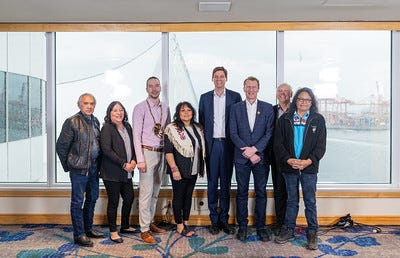
The Peace River Regional District Board wants to make sure that there is plenty of communication, public engagement, and education about the Treaty Land Entitlement process from the Provincial government.
“When it comes to the education of the public, it’s best to have it from the experts, and I don’t want people making assumptions on stuff that they don’t know about,” said Area B Director Jordan Kealy at the July 20 PRRD Board meeting. “It’s better to give them exact facts.”
Two representatives from the provincial Ministry of Indigenous Relations and Reconciliation (MIRR) were at the Board meeting to discuss progress on Treaty 8’s Treaty Land Entitlements. This is a long process, according to MIRR, and to date only one land transfer has been completed – a 14-acre parcel in the Fraser-Fort George area, to the West Moberly First Nations.
“We want to make sure there’s a really good understanding of what the land transfers are in the northeast, and why we’re doing them,” said Tara Forest, senior resource coordination officer for MIRR. “This is a multi-year process. As part of that process, we’re engaging with the public, local government, the Northeast Roundtable, and other interest groups.” Forest said that MIRR is making sure that when lands have been identified, the government knows what the interests are in relation to those lands.
At it’s most basic, Treaty Land Entitlement (TLE) is the process of making up for lands which should’ve been provided by the Federal government over 100 years ago but weren’t. According to Forest, some of the reserve lands that were provided at the time of the Treaty, were based on population, but not all the community members were included in that census.
“Here we are, a hundred years later, and these lands are being selected as part of a specific claim with Canada, the Province of British Columbia, and First Nations. We also have lands being transferred as part of the impacts of the Site C construction,” she said. “We have a number of Treaty 8 First Nations that are being impacted by the project.”
Area C Director Brad Sperling asked the MIRR representatives what their plans are for communication and engagement.
“You talk about focus groups – that’s us – but we’re not experts, and this isn’t our job to present this to the public,” Sperling said. The Northeast Roundtable is a great group, but they don’t represent everyone, he added.
“Do you plan on having more open houses to present this as you go forward? It’s one thing to present it to us, but are you going to have general open houses for the public?”
Forest replied that MIRR has gone out to open houses on parcels that are already in the midst of land transfers. “That process is part of the agreements,” she said. “As we have more parcels coming out, we will do the same process.”
She went on to say that this process is conducted by going to the communities which are closest to the parcels of land in question, communities which are most likely to have an interest in the transfers. For example, they’ve gone out to Cecil Lake and Rose Prairie in relation to the Doig parcels.
“We’ve really looked to ensure that we’re connecting to those communities that have the interest.”
Dale Morgan, regional executive director with MIRR, said that they still have a lot of Site C lands to work through, and “that’s where we’ll see the most engagements.”
“Can we see the individual TLE agreements?” Kealy asked.
Morgan said that they do plan to post the land agreements, which were signed in February. “The quanta of land has been well-publicized, so it’s not like a surprise,” he said.
“The big meeting with the PRRD recently caused some concerns from the First Nations about posting their agreements, they didn’t want to see a backlash,” Morgan said. “But if you look at our website, we have posted many of our agreements and the commitment is to do that for all of our agreements. It might take a few more months, but I expect they should be published by the end of the year.”
Area E Director Dan Rose agreed with the other directors and urged MIRR to “get the finalized text of the TLEs out to the public as quickly as possible.”
Information needs to get out to the public early, and often, Board members emphasized.
“You have some work to do,” Taylor Mayor Brent Taillefer. “If we can be of assistance, we should be on the road together to help get the message out. But we need the information, and we need it early enough.”
“If we don’t see proper consultation with the public, all they can do is make assumptions,” said Kealy. “Land is a sensitive subject. Our best weapon is information, and being able to give that to people so they don’t make assumptions.”
Leonard Hiebert, Board Chair and Area D director asked if there is a communication plan for progress reports to the public.
“That’s a great idea – that’s the kind of thing that we’re going to have to do,” said Morgan. “We don’t have that in place, I think we’ve got some work to do on that.”
“We’re not making decisions right away,” he said. “We have identified the lands, and are committed to ensuring those lands will transfer, over a period of time. Ensuring that all tenures, overlapping, and issues are resolved before we transfer those lands. If that takes four months, awesome. But if it takes five years, then it takes five years.”
For more information about the Treaty Land Entitlement process in BC, check out the government’s Gov Together website https://engage.gov.bc.ca/govtogetherbc/engagement/land-transfers-in-northeast-bc/ This site includes maps, results of previous engagement sessions and contact information. According to the website, engagement is currently open for Saulteau First Nations’ TLE and Site C land selections, and West Moberly First Nations’ new selections.

