Pilot procurement method proposed for 106 Street reservoir project
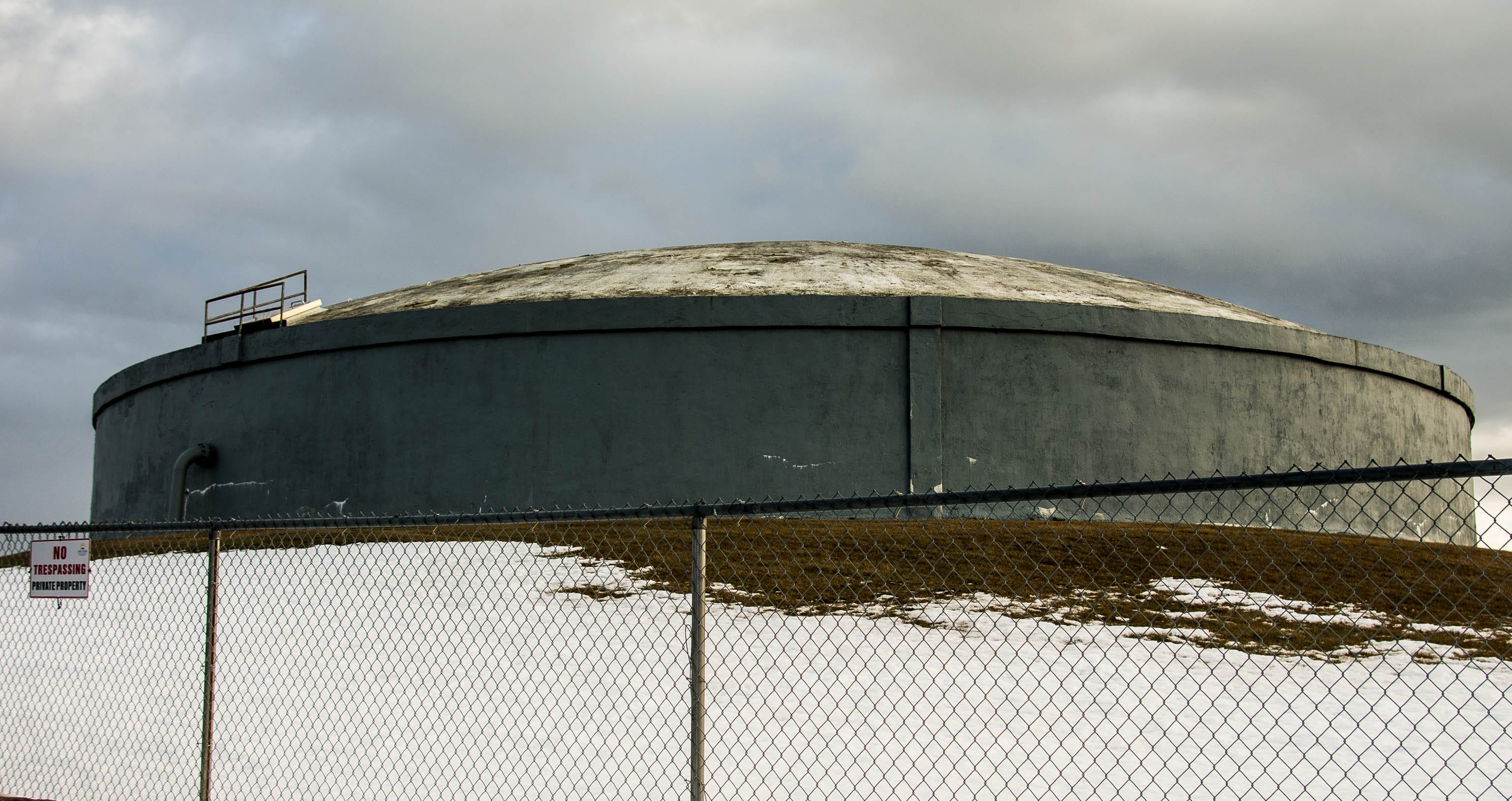
A potential tariff war could affect the city’s ability to procure materials for projects, so with that in mind, Capital Projects Manager, Jim Stewart suggested an entirely new procurement method for the 106 Street reservoir replacement project.
The need for a new water reservoir in the city’s northwest was made apparent during the November 25, 2024, Committee of Whole meeting, when Director of Public Work, Jeremy Garner and Urban Systems Kristin Bayet presented the Long-Term Water Supply Update to council.
The reservoir on 106 Street was installed in 1964, and is rapidly nearing the end of its life, as the concrete is failing, and it has begun to leak. Refurbishing has been considered but isn’t a feasible option.
As the city has grown, there is a need for increased water storage capacity. Staff recommended replacing the existing reservoir with a new one that would double the current capacity to 12,000 cubic metres. The new reservoir would be constructed on the vacant parcel to the south of the current reservoir, allowing the old one to remain in service until construction is complete, delivering a seamless upgrade.
“The plan is to use the existing reservoir while constructing the new one and then switch over,” Garner said in November.
This would also allow the new reservoir to use the existing infrastructure such as the pump house.
This project is projected to cost $8.5 million, and Garner said that they wanted to use bolted steel, rather than concrete, as it would go up quicker than concrete.
In his report on possible procurement methods, Stewart said the reservoir needs to be ordered as soon as possible due to long lead times, and potential delays if using American steel for the bolt together steel tank. Stewart says they’ve found four suppliers, one is Canadian, but the others are either American or rely on the American supply chain.
Given the political climate and potential supply chain issues, being open to other potential models than steel will help prevent the city from being painted into a corner, because of potential supply and pricing issues.
Four procurement methods were considered, including the traditional low bid tendering; a two-stage procurement, with one RFP to purchase the tank and another to install the tank; design build; and negotiated RFP (Design Assist).
The first method is one the city uses all the time and staff are very comfortable with the process. However, Stewart says this method might result in delays and even end up pushing construction of the reservoir off for a year.
The second and third methods would be riskier.
For example, in the two-stage procurement process, although the tank could be ordered quicker, general contractor might not be available when the tank arrives. It also limits the city to one style of prefabricated tank.
With the design build, the one weakness is that the city loses control of the process and would become watchers, rather than facilitators. But it could allow for a different model of tank.
The Negotiated RFP is the method Stewart prefers.


“In this process we tender and issue a negotiated RFP to engage a general contractor and tank supplier as a unified team, to provide design assistance to the city and our consultant,” said Stewart.
“We would go out and bring this team together, complete the design with them in the room – they have the expertise that we don’t have – bring them into the room, go through this process. The contractor, at the end, provides a final construction quote for the project.”
It allows the city, if that budget is within the budget parameters, to award the contract. If it’s outside the city’s budget, they’re not obligated to issue a tender.
“We could take that design back and put it out to tender as a design and be back in that process where we were with the other one, but further down the road,” he said.
The city could get a very good quality design using this method, Stewart said. Because they’ve done these types of projects before, they might also find a better location for the new reservoir within the envelop of the site, and other things city staff are not experts on, to create a better overall project.
“Once we have this team in situ with us, we could effectively start ordering the tank. If it is a prefabricated bolt-together steel tank supplier and general contractor that shows up at the table, and comes through the RFP process with us, we can order that tank. Once we have a quick review of the layout of the property and make sure the location is okay, we can get that tank order relatively soon and get it into production.”
Using a new procurement model is somewhat of a risk, Stewart acknowledged, but it’s very similar to the process that was used for the RCMP building.
The negotiated RFP process has been used in multiple municipalities throughout Western Canada, including Cochrane, AB which uses it for the bulk of their work.
Stewart says his department has reviewed this in how it conforms with Council Policy #22 – it’s a blend of multiple approved processes, between the requests for proposals, pre-qualifications, and then moving on to an award after that process.
“It is something we need to be looking at, because our lowest priced tenders are not our most successful tenders,” he said. “It might be on paper, but between staff time, headaches, public complaints it is becoming a thing of the past in terms of procurement models.”
For small projects, lowest bid tender is great, but for large, complicated projects it’s “just not an elegant way of doing business.”
Mayor Lilia Hansen said she agrees with the Negotiated Request for Proposal as the preferred method and likes the logic behind it.
Council voted unanimously in favour of the following motion:
"THAT, it be recommended to Council that Council directs staff to pilot the Negotiated Request for Proposal Procurement method for replacement of the 106 Street Reservoir as outlined in Administration Report No. 0005/25 - Negotiated Request for Proposal Procurement Method - 106th Street Reservoir Replacement."
Anyone interested can read the report and view the presentation in its entirety on the city’s website.

