
North, South Peace MLAs commit to working diligently for constituents

Although still waiting to take their seats in the legislature, which doesn’t sit again until February 18, the new MLAs from Peace River North and Peace River South are keeping busy working as diligently and effectively as they can to represent their constituents.
Among their first steps to do that has been to open their constituency offices – Peace River North’s Jordan Kealy, and Peace River South’s Larry Neufeld are using their predecessors’ old offices and phone numbers – attending both the BC Natural Resources Forum in Prince George and as a delegation at the Peace River Regional District’s Committee of the Whole meeting on January 23, to hear the directors’ concerns.
Neufeld is the Energy critic, a role that he says is focussed on natural gas and LNG.
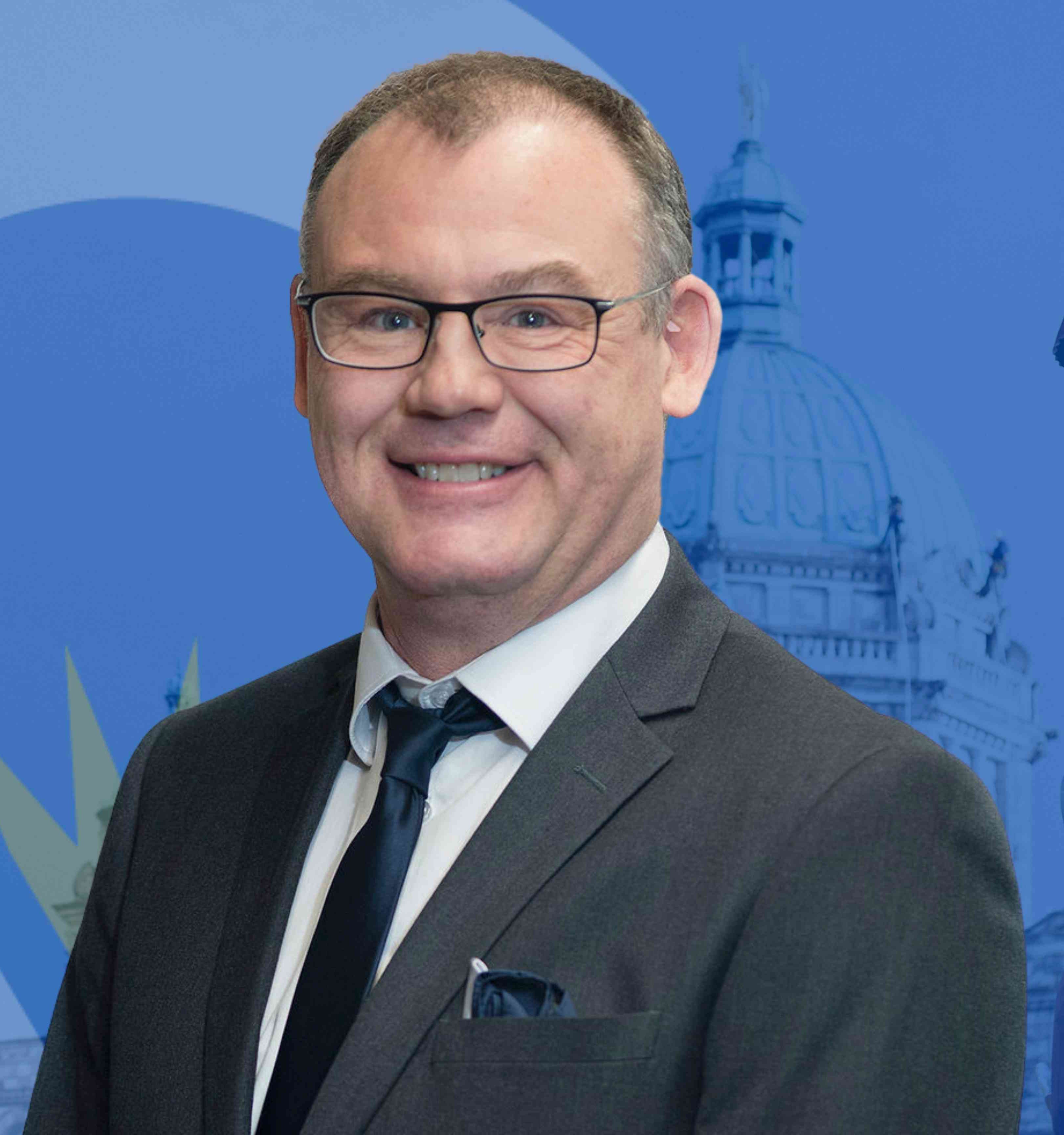
“From the perspective of my portfolio, is that as most of us are aware, we are on the verge of some potentially pretty scary times in this province with what’s happening south of the border and the threats that are going on with respect to tariffs,” Neufeld said.
He said that he’s had the opportunity to speak to CEOs and presidents of oil and transmission companies, in Kitimat and at the Natural Resources Forum, and he believes there is a real opportunity for the northeast, but “it’s a matter of continuing pressure on the government, the existing government to execute on some key points in order to really open up the economic opportunity for the northeast.”
Kealy is the critic for Agricultural Expansion and Food Security, his role is focussed on exploring how to double food production, as BC Conservative leader John Rustad promised during the election.
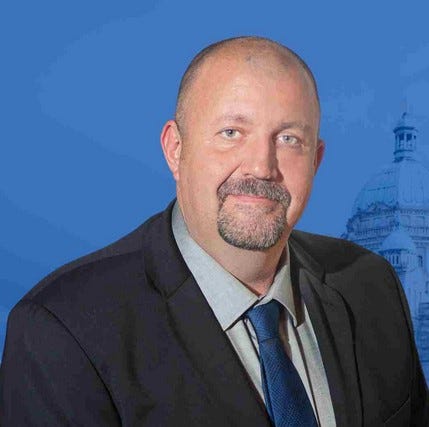
“It’s a daunting task, but I’m definitely up for it,” Kealy said. “I’m also up for looking at how to improve our infrastructure system, to make it more versatile so we can face the challenges and economic issues we’re currently looking at.”
Those challenges that the MLA’s alluded to are slated to kick in on February 1, if President Trump sticks to his word and imposes 25 percent tariffs on all goods entering the United States from Canada.
Fort St. John Director Tony Zabinsky asked Kealy, who appeared via Zoom from the BC Agriculture Council’s annual celebration of agriculture in Abbotsford, how the agriculture community down south feels about the North and its production.
Kealy noted that although there was a presence from the BC Grain Producers and the Cattlemen’s association there was little representation from the North, despite our vast agriculture industry.
“They’re worried about a lot of the same issues right now that if those possible tariffs do come through,” he said. “The effects that will cause on our industry, and I think that’s caused a lot of panic in different scenarios. People are really just waiting to see what happens.”
Kealy suggested that we should get our leaders to focus on why the tariffs are being threatened, rather than trying to come up with countermeasures.
“We’re really just trying to pick a fight with a grizzly bear when we’re just a puppy dog.”
One of the impacts tariffs would have is on the cattle industry, a problem that’s made worse by the lack of diversification in the industry.
“A huge portion of our cattle are getting shipped across the US border. And if we’re looking to have alternate supplies in BC, right now we don’t have the abattoirs to be able to fulfill that need,” Kealy said.
They’re at maximum capacity almost every time anyone wants to book animals.
“Even if ranchers wanted to try and do their products local, we wouldn’t even have that ability compared to twenty years ago when there were quite a few more abattoirs.”
The example of the abattoirs is something that could be done with other products, and Kealy says he’d like to see us build those processes, such as flourmills, to create value-added products, and more potential for our export dollars.
Neufeld echoed Kealy’s sentiments, believing that diversification is important in the energy industry as well as in agriculture.
“The product that we have [LNG] is greatly desired worldwide. It’s just a matter of us having the willingness and the fortitude to get it to market,” Neufeld said.
Our area, he said, has potential access to the coast, but the only project so far that has managed to make good on that access is LNG Canada and Coastal GasLink.
“We’ve been very slow to the plate, we had the opportunity to be the world leader in LNG exports,” Neufeld said. “We initially had seven, eight major projects proposed to go out to the coast. The US had zero. Now they have five, and they’re building four more. And our first one – there’s gas in it, but they’re not shipping yet.”
The overabundance of regulation has chased away investment, and it’s creating concern for the future in the development of major projects.
Neufeld described LNG Canada as the largest private investment in Canadian history, with it’s $20 billion of private money invested in the facility and pipeline.
“We need three, four more of those. And we need to keep pressuring the government in order to execute.”
He’d like to see value added to the energy sector, particularly a refinery, but he doesn’t think there will ever be another refinery built in Canada.
“Even if we could convince someone to build it, it’s going to be five, ten years to get that done,” he said.
British Columbia relies on the US as a trading partner, Neufeld and Kealy agreed. Without the infrastructure to get our products to other markets and other parts of the country, we don’t have a lot of options should tariffs come our way.
Kealy said we need to have the ability to build sector to diversify secondary products from our own raw resources and have the infrastructure to get those to other markets.
“For the volumes that we would need to really turn things around, and do it internally, we don’t have that infrastructure here,” Neufeld said. “This is something that should have been done 15, 20 years ago.”
Neufeld cited a recent projection that showed the looming tariffs could cost up to 144,000 job losses in British Columbia.
“It’s going to affect our standard of living. It’s going to affect the prices of everything that we deal with. It’s not going to be a pretty thing if it does happen.”
Directors express regional concerns:
Among the concerns the directors brought to the MLA’s attention at the meeting were the cumulative impact studies and Environmental Assessment for windfarms; mill closures; and the North’s apparent invisibility to the government in Victoria.
Area C director Brad Sperling brought up the concern around the province’s decision to waive the EA process for windfarms and said that he didn’t come away with “a warm, fuzzy feeling” when he met with Energy Minister Adrian Dix at the BC Natural Resources Forum.
Sperling feels Dix has the same attitude he did as Minister of Health: “We’re gonna do it, and you guys should really get over it.”
Sperling pointed out that of the 300 wind turbines in the province, 200 of them are in the North. The Taylor Wind project alone will add 40 turbines to the total.
“He kept touting that First Nations own 51 percent [that’s] never been done before. This isn’t about ownership,” he said. “Local ownership means money stays here. That’s not what we’re talking about.”
Industry throughout the North has been devastated by bad practices, but what concerned Sperling the most was Dix’s assertion that there are countries in the world smaller than the PRRD that have thousands of wind turbines.
“Now that scared the hell out of me because they’re just once again going to use this as a dumping ground,” he said. “We’ve got plenty of power up here, they aren’t doing this for us.”
Neufeld agreed with Sperling’s concern.
“To be able to, arbitrarily, just decide not to follow your own rules is hypocrisy of the highest order.”
Board chair and Area D director Leonard Hiebert was also at the meeting with Dix in Prince George.
“I kept coming back to the same thing – how can we get our hands on this cumulative impact study?” Hiebert said.
How can the PRRD get the information the farmers and other landowners need to understand the impacts these windfarms are going to have, he asked.
“Minister Dix just stood back and couldn’t really answer because they don’t have that information, because they’ve never done it.”
“The one document that’s supposed to keep this all in place is our environmental assessment. But you take that out of the picture, now we have nothing.”
Another concern was that with the lack of access to Crown land for these projects, companies are looking to private land. Hiebert said he’s received many phone calls from his constituents in Area D, telling him that companies are looking for private land for future wind projects.
This is a prime example of the government not having a strategic plan, knowing the demands BC faces and having projects in place to meet those demands, Kealy pointed out.
“Site C is going to be coming online, and every bit of power that they’re making is already completely consumed,” he said.
“One of the biggest problems I have with wind, from a strategic planning standpoint, is that it’s inconsistent. [The government] says that this call for power is going to create eight percent of our needed power for the province, but the wind is never 100 percent.”
Building these electricity projects is having adverse effects on the arable land in the province. Several board members noted that farmers aren’t allowed to take land out of the Agricultural Land Reserve so that their children can build a house on the farm, but the province is fine with destroying arable land for electricity projects.
Take Site C’s construction for example, a unique agriculture micro-climate was destroyed to satisfy the demand for electricity.
“It was the best land we had in the Peace Region, and it actually had a longer period for being able to grow the products because of the unique area it was in,” said Kealy. “Yet that got lost because of the power demand and the planning process that this government had.”
In another example of lack of planning by the provincial government, Sperling noted that ER closures are continuing in the region, with Chetwynd and Dawson Creek experiencing the most recent closures.
The situation rural healthcare is in, is one that has been twenty years in the making and won’t be fixed in six months.
A possible long-term solution, could be increasing training opportunities in the North, possibly expanding the Baccalaureate Nursing program in Fort St. John to a Registered Nurse program. Having local training programs will prevent the region’s young people leaving for their education and not coming back.
“The more seats we can get back in this area, the more chance we’ve got,” Sperling said.
Neufeld, who is one of those without a family doctor, has sympathy for those in a similar situation. He believes that the model BC Conservative leader John Rustad promoted throughout the provincial election is the way to go – a Western European model.
“They’ve shown incredible success. Orders of magnitude better success than we have,” he said.
He agreed that the more seats available in the medical programs in the North, the better chance of keeping those nurses here in the North.
“Having educational opportunities closer to home, people that have spouses, have children, have lives in the community are much more likely to stay in the community.”
Kealy said that part of the problem is that the bureaucracy and politics revolves around the Lower Mainland and their health industry. It’s not that they’re ignoring the North, so much as it’s just not part of their perspective.
“It’s also the approach that they use for our system is it’s for the Lower Mainland and the dynamic that’s down there. It doesn’t necessarily work with rural BC,” he said.
“They don’t necessarily see how dire the situation is and the side-effects from it.”
Side-effects from government decisions were on Fort St. John Director and Mayor Lilia Hansen’s mind, when she pointed out that the provincial government is expecting municipalities and regional districts to pay a greater percentage for capital projects, like hospitals, when rural, resource-dependent areas are losing money.
“In our area, we have multiple mills being closed. I can see why they don’t want to bring it up, but it needs to be discussed because there are unintended consequences by decision that we make at all levels of government,” Hansen said.
She said she didn’t hear any recognition from the government at UBCM or the Natural Resources Forum that Fort St. John’s Canfor mill had closed in December.
Mills were lost in Mackenzie, Chetwynd, Fort St. John and Vanderhoof. The Vanderhoof and Fort St. John closures were announced on the same day.
“Why wasn’t Fort St. John recognized at the same time, when Vanderhoof is being mentioned? To me, it’s a disregard or are we seen as being invisible up here in the North?”
Hansen’s other concerns included healthcare, the revolving doors of the court system – residents and businesses in Fort St. John are concerned about crime and their safety, she said – and transportation.
A reliable rail service is needed, especially going up to Fort Nelson-Northern Rockies.
“It has to be upgraded, we need it to be able to carry heavier loads,” Hansen said. “How are we going to get more manufacturing or industry work happening farther north if we don’t have the transportation?”
Of course, there’s also the Taylor Bridge, which Hansen says feels like a broken record because it’s been brought up so often as an urgent need.
“I do believe that industry has a lot of power. We just need to work together and speak loudly.”
Hansen hopes the province is listening, and that these key points hit home.
Kealy agreed, adding that Hansen brought up some major concerns for rural BC and the Peace region.
“Our communities were built off of the resources that are around us,” he said.
But unfortunately, this current government doesn’t have a rural perspective. Almost all the NDP MLAs are from the Lower Mainland. Kealy thinks that they’re not ignoring the North out of ignorance as much as they just have a different perspective of life.
“I’m more than happy to be that big roadblock in their way in every hallway possible to make sure they know how rural BC operates.”
Kealy says there’s a major disconnect between rural and urban British Columbia, and he wants to make sure that the government understands that there’s not just one solution for the whole province.
“I think that’s where we have to find that balance in our government is to look at all of BC, not just one tiny little portion of BC.”