
More and affordable seniors’ housing needed in FSJ
Save Our Northern Seniors (SONS) president, Margaret Little was pleased to hear of the 115-unit Seniors’ Housing complex planned for the former Fort St. John Hospital site.
“I’m really happy to see that the City is working to make sure that that new complex goes ahead on the old hospital site. When Peace Enterprises came to SONS and asked for letters of support, we provided letters of support because we felt there was a gap in the community for people in the middle section and higher up who wanted to have a facility to go to after they couldn’t stay in their own home anymore,” said Little.
The need for all levels of affordable housing for seniors in Fort St. John has continued to increase, ever since the Peace Lutheran Care Centre and Elks Sunset Home were first constructed decades ago in the city.
The complex that was planned across from the present hospital would have met the needs of many people, Little said, and there were many disappointed people when the project was unable to go ahead.
“When the announcement [for the complex on 100 Ave] came out on Facebook, within five minutes there were four people saying, “how do I sign up?”. I was absolutely flabbergasted. The need is really there, for everybody.”
It’s not just local seniors’ groups that are calling for more and affordable housing for seniors. The United Way British Columbia recently released a report examining the plight of seniors throughout the province. If something isn’t done soon, many seniors in BC and Fort St. John, may soon become homeless.
The United Way BC report, Aging in Uncertainty: The Growing Housing Crisis for BC Seniors, found that seniors in BC are experiencing alarming rates of financial hardship, with more than 15 per cent considered low income. In 2020, one in four seniors in BC had after-tax incomes below $21,800. Seniors are struggling to find affordable housing in the face of soaring living costs, inadequate government retirement incomes, and a shortage of affordable housing.
The problem has been increasing for generations, and although some efforts have been made to provide affordable, accessible housing for seniors in the community, it’s not enough.
In the 1950s-1960s, there was a drive to build the Peace Lutheran Care Home on 108 Avenue, the city’s first long-term care facility. Later, the Peace Lutheran Apartments, which are independent living, were added. By the 1980s, Fort St. John had this facility, plus the Elks Sunset Home, another independent living facility on 98 St between 110 and 111 Avenues. But it wasn’t enough to keep up with the growth in the community. People were still having to go to Pouce Coupe for long-term care.
Margaret and Jim Little became involved with SONS when it officially started in 2005, she said. “We have been working ever since then on trying to advocate for more housing. Specifically, the third house at Peace Villa, because that’s one we really need.”
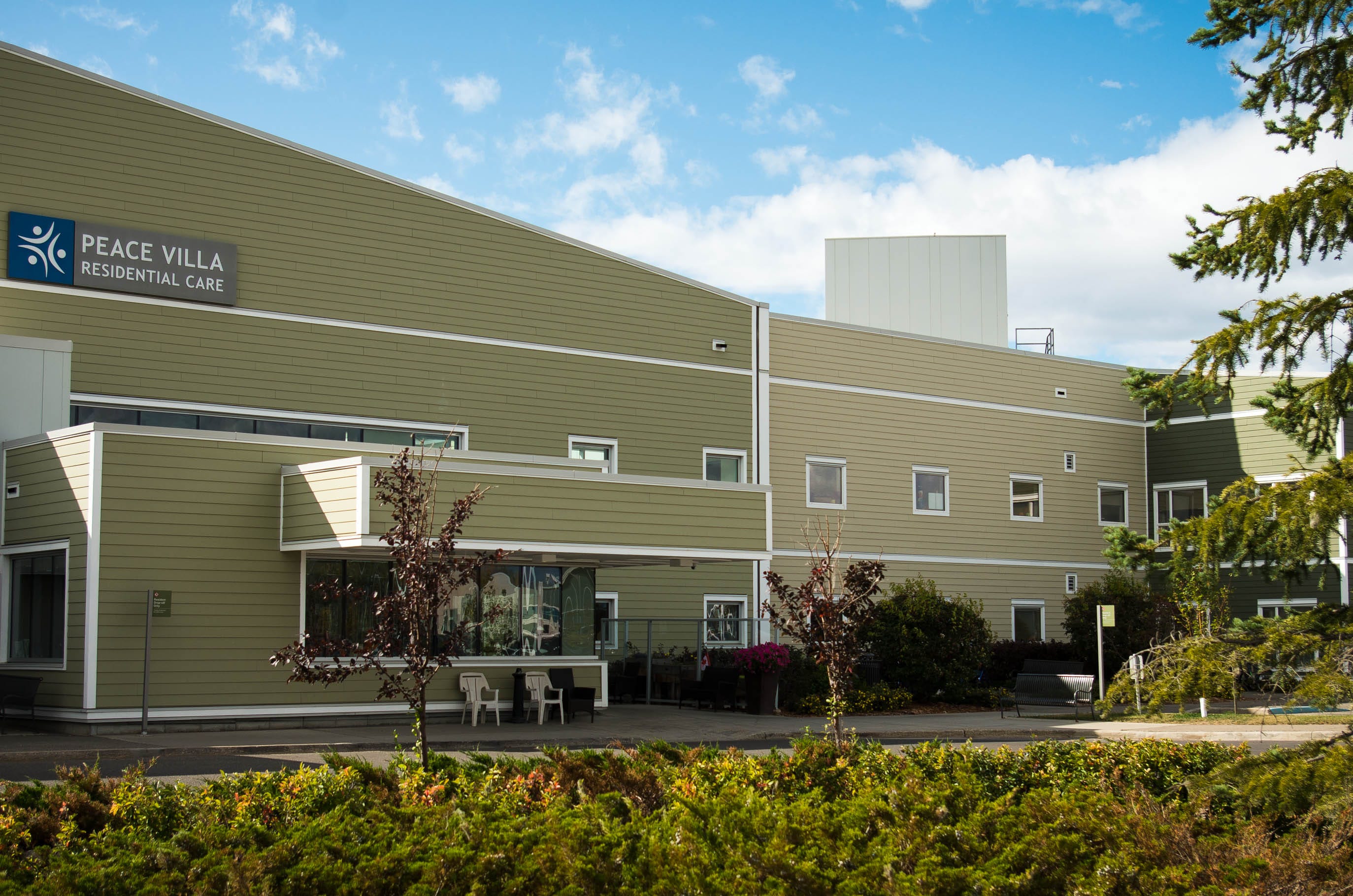
Currently, Peace Villa is Fort St. John’s only long-term care facility.
The Peace Lutheran Care Home has been transformed into an accessible independent living facility, called North Peace Housing Seniors Housing. There are several other independent living and assisted living facilities in the city, including Heritage Apartments, with two independent living and one assisted living facility; Crosstown Apartments has accessible independent living for seniors and those with mobility issues; and Abbeyfield House is an independent living facility.
Little said she has been advocating with SONS to increase housing opportunities. “When my mom had to go into Peace Villa in 2013, it was full then and it’s full now. When it opened it was full – we told them that they should do the whole thing to start with.”
Northern Health has developed a business plan for the third house, which the board has approved. At the beginning of 2022 it was sent off to the government. Little said they’ve been waiting patiently, to no avail.
“Everyone at Northern Health has been really supporting the third house, they understand the situation, and they understand what the community needs, because they know what’s going on. But it’s stuck at the government level.”
“Right now, there are care facilities being built across the province, and the story is that we don’t have the numbers. I would beg to differ.”
Little says there are seniors waiting to get into all levels of care throughout the city. Some who do have housing, have received eviction notices, so they too, need somewhere to live.
The housing situation is becoming precarious for seniors, and the Aging in Uncertainty report sets out several goals that Little believes are key to staving off homelessness.
“Most seniors want to stay in their own homes. But they can’t because of the cost of living, and they can’t afford to renovate.”
A 70-year-old senior, dependent on government benefits such as OAS, GIS, and the BC Seniors Supplement, would spend 78 per cent of their income on rent for an average one-bedroom apartment. The first three goals of the report target the need for access to more low-income rental housing for all ages in British Columbia, while the last three goals are specifically tailored to the needs of seniors.
Goal #4 of the report is to increase financial assistance for low and moderate-income seniors living in private market rental housing by introducing needed changes in the SAFER program.
SAFER, is the Shelter Aid for Elderly Renters program, which if a senior qualifies, helps pay part of their rent. “But it’s not enough and it never kept up with inflation,” Little said.
If seniors are having to spend 78 per cent of their income on housing, there’s not a lot leftover for other necessities, says Little. The cost of food is astronomical, and the number of seniors turning to the Foodbank is increasing.
“The rents are high, food is high, transportation costs, mortgages, everything has skyrocketed. People can’t afford good food. If you don’t have good food, your health goes, and then you become part of the medical system – it’s like a stepping stone to the top where you’re in a facility.”
But of course, there aren’t enough facilities.
‘If you can give them supports in the home and have a reasonable cost of living – we need to start from square one,” she said. The Better at Home program has over 200 people in the city and surrounding area accessing its services. Seniors are asking for supports so they can stay in their own homes.
One of the goals in the United Way BC report, Goal #6, is to ensure that housing a navigation support system, shelter system, transitional and supportive housing are adequately funded, accessible, safe, and appropriate.
“That’s one of the things that’s really important, you have to have in place in our communities, not just Fort St. John, all our communities in the northeast, to facilitate the number of people that are coming up.”
Another item in the report, that Little says she’s really keen on getting going is Goal #3.
“To develop multi-sectoral tables and coalitions to identify the common housing issues, and develop community-driven solutions, appropriate solutions for our communities,” she said. “I don’t propose to say that in Pouce Coupe you need this, Tumbler Ridge you need this, and it all has to be the same. We’re not the same, you can’t use a cookie-cutter approach.”
These solutions need to be accessible.
“There’s many, many people – just look around Fort St. John and see how many people are in wheelchairs, using walkers or canes, it doesn’t matter what age you are, the buildings that they build from now on need to be accessible in all avenues.”
Underlying the various intertwined issues for seniors, is fear. Fear that when they think about where they are going to go when they can’t look after themselves in their own home. Fear that they won’t be able to manage without supports to help them, supports that aren’t there. The fear that they must go somewhere but there’s no place to go on a fixed income.
Margaret Little will be at the Peace River Regional District Board meeting on Friday, December 8 at the Pomeroy Hotel, on behalf of SONS to present the Aging in Uncertainty: The Growing Housing Crisis for BC Seniors report to the board. To read the full report, go to https://uwbc.ca/program/healthy-aging/#research-&-reports