Ministry reps explain process for proposed BRFN tenure award
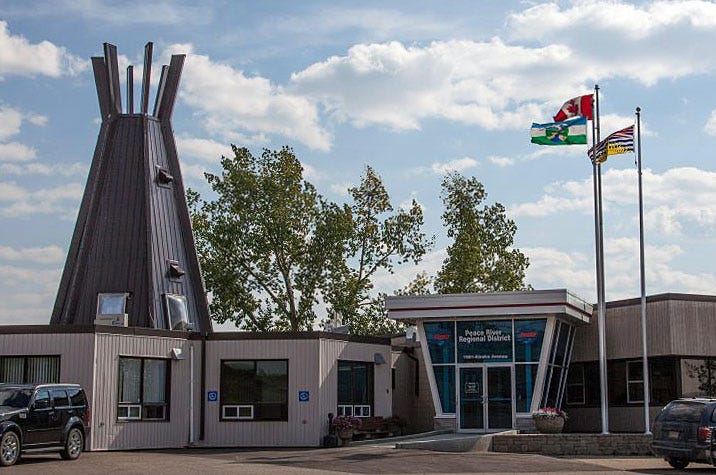
Regional District directors were keen to provide informed feedback on the proposed direct tenure award to Blueberry River First Nations, following a request to do so that they discussed at the Feb. 22nd regular board meeting. In an effort to understand the process, the Peace River Regional District invited Ministry of Energy, Mines and Low Carbon Innovation representatives to present at the March 7 regular board meeting.
Directors noted that the opportunity to consult with the provincial government on issues is rare these days, and they felt they owed it to their constituents to take advantage of the Ministry’s request for feedback.
The regular process of awarding tenders to petroleum companies has been paused for years, partly due to Covid and the difficulty it presented in conducting the consultation process with First Nations, and then following the Yahey decision.
This direct award of tenure is specific to BRFN, said Doug Bourhill, director of resource access and stewardship at the Ministry of Energy, Mines and Low Carbon Innovation.
“The consultation process followed for the direct award is the same as the process used in regular tenure sales,” Bourhill said. The difference is in the decision-making process following the consultation period.
Normally, once the consultation is completed, the Ministry reviews all the information and decides whether the parcel will be posted for sale, and adds any caveats, or stipulations. These caveats could include concerns about existing infrastructure, land use plans, environmental concerns and so forth, that come up during the consultation process, for example, said Bourhill. “Caveats notify title holders of any of those concerns.”
If posted for sale at the monthly auction, the tenure is awarded to the company with the highest reasonable bid. In the direct award process, tenure is awarded by a decision of cabinet, not public auction.
Under the direct award to BRFN, the following simplified alternate terms are proposed, including no initial cost to BRFN “in order to advance reconciliation and to support economic opportunities.”; the same rent as a standard lease, but with the option to defer initial payment; a 10-year initial term, as opposed to the usual three to five-year term, with the option to convert to a standard five-year lease; and the tenure cannot be divided unless it’s first converted to a lease.
The ten-year term is specific to BRFN, said April Connolly, senior advisor First Nations relations with the Ministry. “Through the alternative disposition there is discretion to apply any term. There is no structure around the alternate process other than it goes to cabinet for a decision.”
Connolly added that the direct awards that are being considered have come out of the agreements between the province and First Nation, and in the case of the Blueberry it’s in the implementation agreement.
While this proposal is for BRFN, Bourhill said that the option of direct awards have been offered to all Treaty 8 First Nations, but “it would be up to the individual First Nations, based on the interests of the nations if they want to develop any rights,” he said.
Dawson Creek alternate director Charlie Parslow was concerned that the direct award is similar to the changes the government suggested for the Land Act, that it’s “something that’s moved from an elected body, the government, to an unelected body.”
Connolly assured Parslow that this was not the case, that the Minister normally decides if tenure is to be awarded in direct tenure awards but in this instance, cabinet makes that determination. “No decision-making is being transferred to Blueberry River First Nation,” she said.
Other Treaty 8 nations would probably be interested in parcels closer to their reserves, observed Chetwynd director Allen Courtoreille. “Some of the maps show that Blueberry is out to the east, and the tenures are west and closer to the Alaska Highway,” Courtoreille said.
“We have talked to all the First Nations about the award, so I’d say those conversations are still early,” said Connolly. “We’ve been sharing some information about geological potential in areas that they’re interested in. Other nations are still considering it.”
Bourhill said they’ve been fully transparent with First Nations and in working with them, if they would like to pursue a direct award for themselves.
“We’re trying to design a process that’s fair and equitable across the board for all Treaty 8 First Nations,” he said.

