Economy top regional issue in RGS – housing, agriculture, community building in top 4
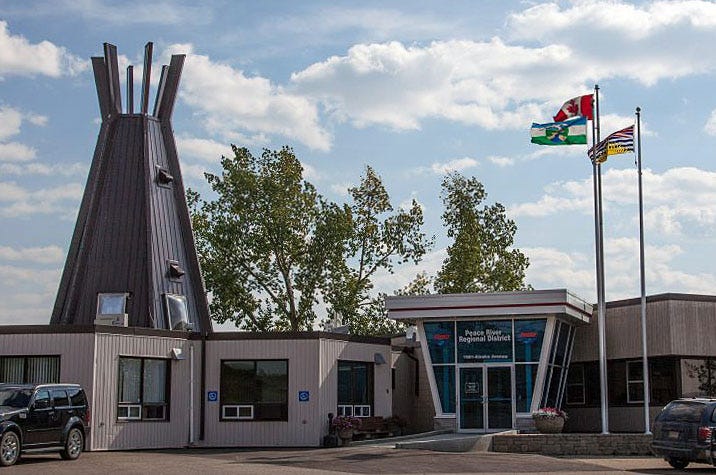
With the first two phases of the Regional Growth Strategy development complete, which included two phases of public consultation, one thing is clear – the most important issue for Peace River Regional District residents, both rural and urban, is the regional economy.
The Peace River Regional District used its existing Strategic Plan as a starting point for developing the RGS and hoped to use that document’s vision statement as a guide.
The aim of the finished document is to ensure that the region works towards a common future shared by both member municipalities and rural electoral areas, guiding long-term regional growth and development, while supporting co-ordinated region-wide planning.
In August 2023, the first phase of the RGS project began, with the creation of a steering committee and plans to consult with residents through various engagement opportunities.
Through the IdeaShare online engagement platform – used to crowd-source a variety of ideas – which asked participants “What would help keep the Peace River Regional District a diverse, abundant, and liveable place?”
The top four answers included preserving the rural character of the PRRD; ensuring participation of rural residents and agricultural producers in the RGS to help protect the region’s character; that communities are being impacted harder by extreme weather events; and highways and road access needs to improve for both safety and to improve connections between communities.
From November 2023 to February 2024 the Have Your Say online survey, consisting of five-questions sought participants’ opinion of the regional district’s Vision Statement, as well as feedback on regional planning issues.
Almost half of the responses came from Areas B, C and D, while a further 40 percent came from the cities of Fort St. John and Dawson Creek.
The top four regional issues ranked by respondents were: Regional Economy; Housing and Affordability; Agriculture and Food Security; and Public Health and Safety.
Fifty-eight percent of those who responded to the online survey, liked the existing vision statement. Those who didn’t or said it was just “okay”, asked that items such as rural communities and agriculture; environmental protection; economic development, including oil, gas and agriculture; and that promoting collaboration, partnerships, and community building all be added to the vision statement.
Phase 2 took place between January and July 2024, with its public engagement consisting of nine in-person engagement sessions, along with a Community Workbook survey that was distributed both in-person and online.
Between the first and second public consultations, the PRRD’s vision statement was modified and the titles of the regional issues were changed “to be more inclusive of resident’s feedback and priorities and an additional topic area was added,” according to the What We Heard report.
Overall, respondents liked the updated vision statement, although there were some concerns that it’s too broad, that it could better highlight the distinctive character of the regional district, and that it should focus more on collaboration between communities.
The draft vision statement for the RGS, following the first two phases of the project:
Vision
“The Peace River Regional District is comprised of distinct and unique urban and rural communities. The region is shaped by its roots in agriculture and its culture of independence, resilience, and compassion for others.
With a strong regional economy, residents enjoy a high quality of life with a broad array of effective and responsive regional services.
Moving forward, we will continue to build strong collaborative relationships with all residents and First Nations in our region. And we will engage and involve all residents and communities as we move towards a bright, prosperous and healthy future.”
Among the issues participants felt was missing from the list of regional issues they were asked to rank, were inter-city transit and handy-dart services; new sources of water and the protection of existing sources; celebrating entrepreneurs; and including rural people in conversations around governance and agriculture.
Whether they participated online or in-person, regardless of the titles of the regional issues, the issue that was top of mind in both phases was the economy.
The top four regional issues ranked by respondents in Phase 2’s engagement were: Economic Strength and Resiliency; Transportation and Mobility; Collaboration; and Community Building.
Despite the emphasis of the online surveys towards a concern about the climate and the potential increase in more extreme weather events because of climate change, in both Phase 1 and 2, participants ranked climate last in the list of regional issues.
At the November 7 Committee of the Whole, General Manager of Development Services, Ashley Murphey and John Ingram, principal and senior planner with Eco-Plan International presented the What We Heard report to the PRRD board of directors.
Ingram told the board that the draft RGS is scheduled to be completed by February 2025, and will be organized around nine policy goals, which are all interconnected and developed through “community engagement and outreach.”
The regional district directors had few questions following the presentation, with only three directors raising concerns around how to describe the Regional Growth Strategy in one or two sentences; and expressing a concern that forestry is not mentioned in the vision, while agriculture is, when there is a direct correlation between forestry and housing in forestry-dependent communities like Chetwynd and Fort St. John.
In answer to Area D director Leonard Hiebert’s question about a simple one or two-sentence explanation of what regional growth strategy is, Ingram said:
“An RGS is about a long-term, high-level strategic plan to help guide growth in the region and coordinated regional planning, between municipalities and the regional district.”
To Chetwynd director Allen Courtoreille’s question about the lack of reference to forestry, Ingram said that while it was not specifically mentioned, the “oil and gas industry, other natural resource industries, do figure quite prominently in the RGS itself and in the policy areas in the emerging document.
“That information comes out quite strongly there and in the policy chapters that are broken up in those goal areas, you will see it’s acknowledged and coming out in those areas.”
Following the development of a draft RGS by February 2025, the next steps for creating the RGS will be developing a coordinated implementation framework, Ingram explained.
The coordinated implemented framework is scheduled to begin in March 2025, and will identify potential regional projects, which can be things like updating the regional subdivision servicing by law, for example, he said.
“It will speak to regional context statements, outlining the kinds of procedures and requirements for them. And then it’s also going to look at regional long-range planning, aligning the RGS with other long-range plans and initiatives from across the region,” said Ingram.
“There will be member municipality presentations and referrals in the spring, another board presentation also in the spring, and then moving towards bylaw, implementation or bylaw adoption and implementation supports by May 2025.”


