
Climate resiliency project facilitator says North will have Okanagan-like weather by 2080
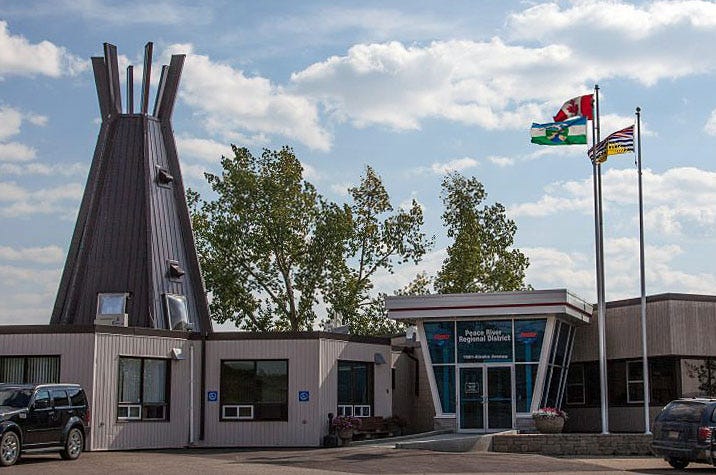
Climate projections can help us understand the potential conditions that we need to prepare for, according to Cariad Garratt, principal at Pinna Sustainability Inc. Garratt used climate projections prepared for northeastern British Columbia by the Pacific Climate Impact Consortium as the basis for the recently held public engagement sessions about the Peace River Regional District’s proposed Regional Climate Resiliency Plan. The results of the summer public engagement were presented to the PRRD Board of Directors on Sept 12.
The RCRP project involves gaining a better understanding of the potential impacts of climate change in the Peace Region and identifying the role of the PRRD in improving resilience to the identified impacts, paying particular attention to rural areas, Garratt explained.
The goal of developing a Regional Climate Resiliency Plan, said Garratt is to protect the health and well-being of Peace Region residents.
The climate projections Garratt used show that the Peace Region will experience increasingly warmer summers.


“In the past the region experienced an average of about 12 days of over 25°C annually,” said Garratt. “By the 2080’s we can expect that to be closer to 50 days. About four times more days that we would be over 25°C.
“By the 2080’s, summer temperatures in Fort St. John are expected to be like Kelowna’s, in the summers of the 1980’s.”
These temperatures could trigger heat-stress across the region, a higher demand for water, and during dry spells could create challenges for water supply, water quality and food production.
Winters are also expected to be warmer and drier, with 28 percent less frost day, and 37 percent longer growing seasons, Garratt said.
While summers and winters, according to the climate projections are expected to warmer and drier, more precipitation in the spring and fall could lead to more frequent flooding. The intensity of wind, rain and hailstorms are also expected to increase leading to a greater number of extreme events.
In addition to the potential impacts on climate of the Peace Region, and what the PRRD can do to mitigate them, the project also looks at the Greenhouse Gas Emissions that are contributing to climate change in the region.
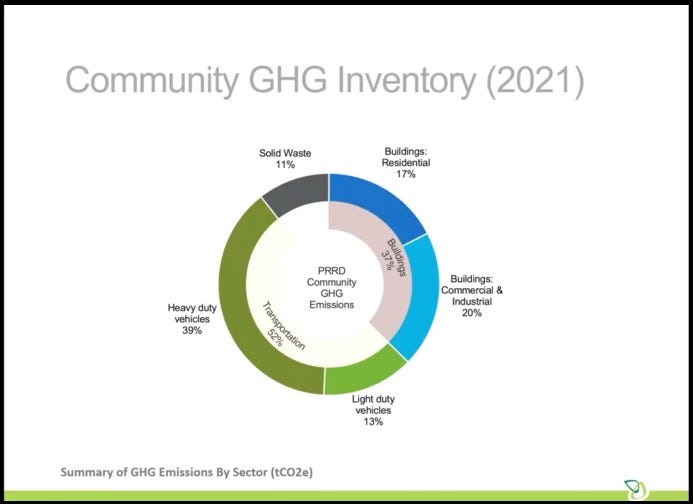
The Community GHG Inventory graph outlines areas “where the Regional District can consider developing policies or programs to reduce the region’s contribution to climate change,” Garratt said.
Of the GHG’s emitted in the region in 2021, 52 percent came from transportation, with heavy duty vehicles contributing the most at 39 percent. This summary, whose data came from the provincial government, focussed on the rural areas in the region.
This information was presented to the public during the engagement sessions, which consisted of an online survey on the PRRD’s Have Your Say page, and several Open House-style events during the summer, starting on June 8 at the Fort St. John Farmer’s Market, in conjunction with the Open House for the Regional Growth Strategy.
Garratt said the engagement sessions gave the opportunity for the project team to gain an understanding of the “lived experiences from the community on past impacts that they may have experienced, due to climate-related events, and any concerns that are projected.”
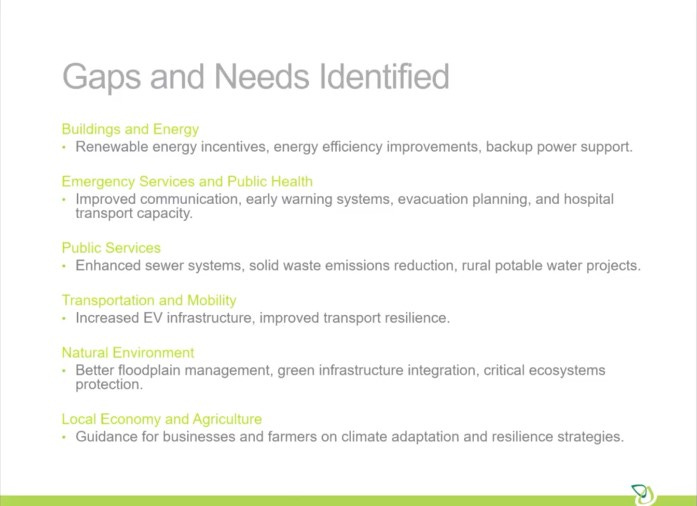
It also provided “opportunities to identify potential gaps to address these impacts and to consider opportunities for action.”
The team received a lot of input from Peace Region residents, with six main areas of concern noted in the presentation.
Buildings: People were concerned that an increase in energy demand could potentially lead to more power outages; that the inefficiency of older buildings in particular could impact their ability to handle the anticipated changes.
Health Impacts: There were concerns about extreme heat; poor air quality due to increasing instances of wildfire smoke; about the increasing pressure on emergency services, evacuations and their potential mental health impacts.
Public Services: Access to potable water; infrastructure vulnerabilities, such as the potential failure of sewer or water systems.
Transportation: People expressed concerns about the infrastructure, the potential for more damage and disruptions due to different climate events; lack of infrastructure to support the transition to zero-emission vehicles.
Natural Environment: There was concern about potential threats to native species and ecosystems due to species shifting and the spread of invasive species.
Local Economy & Agriculture: Concern about the impacts of climate change on tourism, business closures increasing; insurance cost challenges for agricultural producers due to climate, and rising pest infestations.
The presentation included a list of Action Areas that “are emerging for the regional district,” and Garratt added that “more specific actions are to be developed in the coming weeks as continue this engagement.”


Area B director Jordan Kealy was sceptical of the accuracy of the climate data. “I wonder where you get your map data from, that you can predict 55 years into the future? Because right now, the Farmer’s Almanac is the only thing that’s somewhat close, and that only does one year out.”
Garratt that they use global models that model all the climate systems long-range.
“They’re certainly not predictions for an annual basis, it could not tell you what the weather would be in a particular year. But they can quite accurately predict global climate trends over periods of decades,” she said.
Kealy also noted that there’s not much the PRRD can do about the GHG emissions from transportation, as the emissions improvements to vehicles are done by the manufacturer.
“How can we change that for up here without actually going electric, and having vehicles shut-off when it hits -40°C?”
Garratt said that with the trend towards zero-emission vehicles, technology is continuing to improve and shift, and there are other alternatives in the interim. But it “remains to be seen how they will play out in the coldest temperature environments.”
Ashley Murphey, general manager of development services with the PRRD said that as the majority of the transportation-induced GHG emissions comes from heavy-duty vehicles, the use of rail would help reduce the emissions from trucking.
“We have heard from residents, especially in the agriculture sector, that there is a need for increased rail transport,” said Murphey.
“We can advocate for more rail, we’ve been doing that for years,” said Area E director Dan Rose. “The dollars say it doesn’t pay to have rail up here, so until that changes, we’re not gonna get it.”
Area D director Leonard Hiebert was also sceptical of the climate data. He said that in the 1980’s it was said that by the 2000’s summers were going to be as warm as the Bahamas.
“It actually ended up being like we were in the Arctic.”
Hiebert added that to him, climate change happens four times a year with the seasons.
“The extremes are what we need to talk about. Climate change happens all the time,” Hiebert said. “The extremes, according to elders that I’ve spoke to, are cyclical. And they seem to narrow it down to 25 years or so.”
The other thing that concerned Hiebert was that the data provided by Garratt didn’t take into account the amounts of carbon that are naturally absorbed in the region.
“The reports are very one-sided,” he said. “They’re not including what’s already being done and what we can do next to make sure it even further improves.”
“Wildfires resulted in significant losses, and ended up being big contributors to carbon,” Garratt said, and agreed that natural carbon sinks are a very important part of the equation, but they’re not currently quantified at on a regional scale.
Rose said that while it’s always better to have more information, he’s hesitant to “get too much further down the road,” with the RCRP.
“The plan is a plan that we have no control over, that’s the problem with it,” he said. “All of the things you talk about – transportation, infrastructure, buildings, all the rest – that is already controlled by governments above us, and they’re already telling us what to do, even though regionally they have no idea what works here and what doesn’t.”
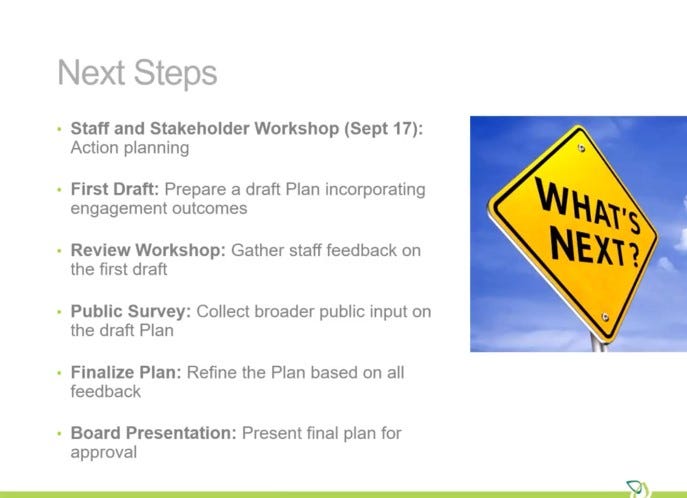
The next steps for developing the Regional Climate Resiliency Plan are a staff and stakeholder workshop on September 17, followed by the preparation of the first draft of the plan, and a review workshop to get staff feedback on the draft.
It will then be put out to the public again, to get residents’ input on the draft plan, before going back to refine and complete the plan.
The Peace River Regional District and Pinna Strategies expect that the plan will be ready for Board approval by March 2025.